Returning to India Checklist: Complete Guide for NRIs
Updated: December 2025
Executive Summary
Returning to India after years abroad is a significant life decision that requires careful planning across financial, legal, immigration, and logistical aspects. This comprehensive checklist covers everything you need to do from 12 months before your return through the first year after moving back.
Timeline Overview:
- 12-18 months before: Initial planning, financial review
- 6-12 months before: Tax planning, account restructuring, job search
- 3-6 months before: Visa/OCI decisions, shipping logistics
- 1-3 months before: Final preparations, account closures
- First month in India: Re-establishment, documentation
- First year: Residential status transition, tax compliance
Part 1: Pre-Return Planning (12-18 Months Before)
1.1 Financial Assessment & Planning
Assess Your Financial Position:
- Calculate total net worth in all countries
- List all bank accounts (checking, savings, investment)
- List all investment accounts (401k, IRA, stocks, mutual funds, pension)
- List all real estate holdings abroad
- Review outstanding loans (mortgage, car, student, personal)
- Check credit scores in current country of residence
- Estimate total liquid assets available for move
Create Return Budget:
- Estimate cost of living in target Indian city
- Calculate shipping and relocation costs (₹3-8 lakhs typically)
- Plan for initial setup costs in India (₹5-10 lakhs)
- Budget for overlap period (maintaining two residences)
- Emergency fund for unexpected expenses (6-12 months)
Currency & Forex Planning:
- Track USD/GBP/EUR to INR exchange rates
- Identify favorable exchange rate for major transfers
- Understand FEMA limits on fund repatriation
- Consult forex advisor for hedging large amounts
- Plan staggered transfers to average exchange rates
1.2 Career & Income Planning
Job Search (If Not Transferring):
- Update resume/CV for Indian market
- Activate LinkedIn profile, mention return plans
- Research salary levels in your industry (expect 20-40% lower than abroad)
- Register on Indian job portals (Naukri, LinkedIn India)
- Network with industry contacts in India
- Consider consulting/freelance transition period
- Identify recruitment consultants in your sector
If Transferring Within Company:
- Discuss internal transfer with manager (12+ months notice ideal)
- Understand compensation adjustment (cost of living)
- Clarify tax equalization or gross-up policies
- Negotiate relocation package
- Confirm start date and transition period
- Understand benefits in India vs abroad (health insurance, retirement)
Entrepreneurship Planning:
- Research business registration process (if starting own venture)
- Identify co-founders or partners
- Secure initial funding or capital
- Understand regulatory requirements for your industry
- Create 18-24 month business plan
1.3 Housing & Real Estate
Housing in India:
- Decide: buy vs rent initially
- Research neighborhoods in target city
- Understand property prices and rental rates
- Consider proximity to work, schools, amenities
- Budget: Rent (₹25,000-1,50,000/month) or Purchase (₹50L-5Cr+)
- If buying: Start property search 6-9 months before
- If renting: Start search 2-3 months before
Property Abroad:
- Decide: sell, rent out, or keep vacant
- If selling: List property 6-12 months before move
- If renting: Find property manager, understand tax implications
- Understand capital gains tax on sale (both countries)
- Plan for repatriation of sale proceeds to India
1.4 Tax Planning Foundations
The diagram below maps how your residential status typically shifts after you return - from Non-Resident, through the RNOR (Resident but Not Ordinarily Resident) window, to Resident and Ordinarily Resident (ROR) - and what changes for your accounts and reporting at each stage. It is general education only; your actual status depends on day-counts and the rules in force for the relevant Tax Year, so confirm specifics with a qualified advisor.
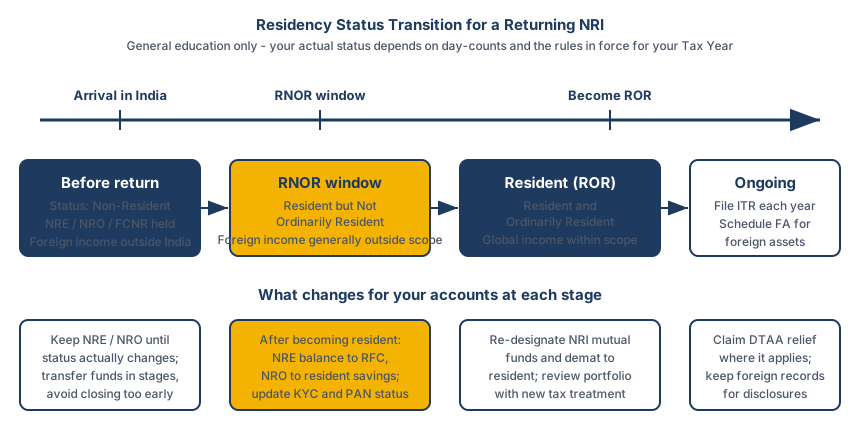
Understand Residential Status:
- Learn RNOR (Resident but Not Ordinarily Resident) status benefits
- Understand when you become ROR (Resident and Ordinarily Resident)
- Plan return timing to optimize tax (fiscal year consideration)
- Calculate tax liability in both countries for transition year
Foreign Assets & Income:
- Understand FEMA reporting requirements
- Learn about Schedule FA in Indian ITR
- Understand FATCA/CRS implications
- Plan for foreign pension/retirement account taxation
Part 2: Financial Preparations (6-12 Months Before)
2.1 Banking & Accounts
Indian Accounts:
- Open/reactivate NRE and NRO accounts (if not already done)
- Transfer funds to India gradually (not all at once)
- Set up online banking and mobile apps
- Request checkbook and debit/credit cards
- Update KYC and contact information
- Link Aadhaar with bank accounts (if available)
- Set up internet banking security (2FA, OTP)
Foreign Accounts:
- Decide which accounts to keep vs close
- Understand minimum balance requirements after departure
- Check if bank allows non-resident account maintenance
- Update address to India (some banks may require closure)
- Set up online access for accounts you're keeping
- Understand foreign account reporting to Indian tax authorities
Account Conversion Timeline:
- NRE → RFC (Resident Foreign Currency) after becoming resident
- NRO → Resident savings account after becoming resident
- Complete conversion within reasonable time of status change
- Understand repatriation rules pre and post conversion
2.2 Investment Restructuring
Retirement Accounts (401k, IRA, Pension):
- Understand withdrawal rules and penalties
- Consider rolling over vs cashing out
- Calculate tax impact of early withdrawal
- Explore keeping account vs transferring
- Consult cross-border tax advisor
- Understand Indian taxation of foreign pension income
Stock & Mutual Fund Holdings:
- Review portfolio and asset allocation
- Decide: liquidate vs transfer vs hold
- Understand capital gains tax in both countries
- Consider holding period for long-term capital gains
- If keeping: Ensure you can manage from India
- Update address with brokerages
Indian Investments:
- Review existing Indian portfolio
- Convert NRI mutual funds to regular (after becoming resident)
- Plan for fresh investments as resident
- Understand changed tax treatment (LTCG, STCG)
2.3 Insurance Planning
Health Insurance:
- Research Indian health insurance plans
- Compare: Employer plan vs individual vs top-up
- Consider pre-existing condition waiting periods
- Get international health insurance for transition period
- Maintain foreign insurance until Indian coverage starts
- Understand cashless hospital network in India
Life Insurance:
- Review foreign life insurance policies
- Decide: continue vs surrender vs convert
- Explore term insurance options in India
- Compare costs and coverage
- Consider portability of insurance
Other Insurance:
- Auto insurance in India (mandatory)
- Home insurance (if buying property)
- Travel insurance (for return visits abroad)
- Personal accident cover
2.4 Tax Preparation
Tax Residency Planning:
- Understand tax residency rules in both countries
- Plan departure date to minimize dual residency
- File final tax return in foreign country (may be due in following year)
- Understand DTAA (Double Taxation Avoidance Agreement) benefits
- Claim foreign tax credits where applicable
Document Collection:
- Gather all tax returns (last 7 years minimum)
- Collect W-2/1099 forms (USA) or equivalents
- Bank statements showing interest income
- Investment statements (cost basis important)
- Property purchase/sale documents
- Loan statements
- Retirement contribution statements
PAN & Aadhaar:
- Apply for PAN card if you don't have one
- Link PAN with Aadhaar
- Update PAN status from NRI to Resident
- Register on Income Tax e-filing portal
Part 3: Immigration & Documentation (6-12 Months Before)
3.1 Visa, Passport & OCI Status
Indian Passport Holders:
- Check passport validity (should have 6+ months)
- Renew passport if needed (can do from abroad or in India)
- Update passport with current address
- Carry passport-size photographs (10-20)
OCI Cardholders:
- Decide: Surrender OCI or keep temporarily
- If keeping OCI: Note that it becomes invalid once you become resident
- Understand: OCI surrender required within 3 months of residential status change
- Apply for Indian passport if you don't have one
- OCI surrender process: Online application + document submission
Foreign Passport/Citizenship Holders:
- Apply for Employment visa (if job offer in hand) OR
- Enter on Tourist visa and convert to Employment visa
- Understand long-term visa options
- Consider PIO/OCI application (if eligible)
- Ensure passport validity for visa application
For Dependents:
- Spouse: Same visa category or dependent visa
- Children: Dependent visa or citizenship documentation
- Ensure all family members have necessary travel documents
3.2 Document Checklist
Essential Documents to Carry (Originals + Copies):
- Passports (all family members)
- Birth certificates (all family members)
- Marriage certificate (apostilled if foreign)
- Educational certificates and transcripts (all degrees)
- Professional certifications and licenses
- Employment contracts and offer letters
- Previous employment letters and references
- Tax returns (last 7 years from all countries)
- Bank statements (last 2 years)
- Investment account statements
- Property ownership documents
- Driving license (international + local)
- Medical records and vaccination records
- School records for children
- PAN card, Aadhaar card
- Insurance policies
Digital Backups:
- Scan all important documents (PDF format)
- Store in cloud (Google Drive, Dropbox, encrypted)
- Keep physical copies in multiple locations
- Create document inventory list
3.3 Professional Credentials
Degree Equivalence:
- Get foreign degrees evaluated (if required for job)
- Obtain transcripts from universities
- Carry original degree certificates
- Consider notarization/apostille
Professional Licenses:
- Research if your foreign license is valid in India
- Apply for Indian professional license/registration if needed
- Doctors: Medical Council of India registration
- Engineers: Check state-level requirements
- Chartered Accountants: ICAI, CPA India equivalence
- Lawyers: Bar Council registration
Part 4: Logistics & Relocation (3-6 Months Before)
4.1 Shipping & Customs
Household Goods Shipping:
- Get quotes from international movers (3-5 companies)
- Decide: Sea freight vs air freight (sea is cheaper, 6-8 weeks)
- Expected cost: $5,000-$15,000 for full container
- Create detailed inventory of items being shipped
- Understand customs duty exemptions for returning Indians
- Pack essentials separately (carry-on luggage)
Customs Regulations for Returning Indians:
- Transfer of Residence (ToR): Duty-free for used personal effects
- Eligibility: Must have stayed abroad 365+ days continuously
- One-time benefit: Used goods, owned for 6+ months
- Exemption includes: Furniture, electronics, vehicles (1 car/jeep)
- File Transfer of Residence application online
- Required documents: Passport, visa, residence proof abroad, inventory
Restricted/Prohibited Items:
- No firearms or ammunition (strict licensing required)
- No exotic plants or animals
- Prescription medications: Carry prescription, limit to 3 months supply
- Alcohol: Limited quantity (varies by state)
- Cigarettes: Limited quantity
Vehicle Import:
- Car import allowed duty-free (one vehicle, used, owned for 1+ year)
- Must be RHD (right-hand drive) - costly to import LHD vehicles
- Consider: Selling car abroad and buying in India (often cheaper)
- Customs duty exemption: Only one vehicle per family
- Understand road tax and registration process
4.2 Flight Bookings & Travel
Book Flights:
- Book one-way flights (4-6 weeks in advance for good rates)
- Choose flights with generous baggage allowance
- Consider premium economy/business if bringing many bags
- Check airline baggage policy (typically 2 bags @ 23 kg each in economy)
- Book direct flights if possible (easier with lots of luggage)
Excess Baggage:
- Pre-purchase excess baggage allowance (cheaper than airport rates)
- Alternative: Ship items separately (often cheaper for very heavy loads)
- Carry essentials in hand baggage
Pet Relocation:
- Research pet import requirements
- Obtain health certificates and vaccinations
- Book pet transport (IPATA certified agents)
- Understand quarantine requirements (if applicable)
- Cost: $2,000-$5,000 depending on pet size and country
4.3 Temporary Accommodation
First Month Housing:
- Book serviced apartment or hotel (first 2-4 weeks)
- Consider extended stay hotels (Oakwood, Citadines, Airbnb)
- Budget: ₹50,000-1,50,000 for first month
- Ensure proximity to work/schools
- Storage facility for shipped goods (if needed)
Part 5: Final Preparations (1-3 Months Before)
5.1 Account Closures & Notifications
Utilities & Services (Abroad):
- Cancel utilities (electricity, gas, water, internet)
- Schedule final meter readings
- Port or cancel mobile phone service
- Cancel gym memberships, subscriptions
- Forward mail (USPS, Royal Mail, etc.)
- Cancel newspaper, magazine subscriptions
- Close or downgrade streaming services (Netflix, Spotify)
Financial Accounts:
- Close unnecessary credit cards (keep 1-2 with no foreign transaction fees)
- Close bank accounts you won't need (after transferring funds)
- Update address on accounts you're keeping
- Set up online bill pay for foreign accounts (if maintaining any)
Government & Official:
- Deregister from electoral roll (if applicable)
- Inform tax authorities of address change
- Cancel driving license (if required) or keep as ID
- Inform social security/pension authorities (if receiving benefits)
- Update address with immigration department (exit formalities)
5.2 Children's Education
School Research:
- Research schools in target city (6-12 months in advance)
- Understand admission process and timelines
- Indian schools: Admissions in March-April for June session
- International schools: Year-round admissions possible
- Request transcripts from current school
- Plan for curriculum transition (IB/American → CBSE/ICSE/IB)
School Admissions:
- Apply to 3-5 schools (competitive in metros)
- Prepare for entrance tests/interviews
- Gather documents: Birth certificate, transcripts, transfer certificate
- Pay application fees
- Attend parent interviews (virtual or in-person)
- Secure admission and pay fees
Curriculum Considerations:
- CBSE/ICSE: If planning to stay in India long-term
- IB/IGCSE: If flexibility to move abroad again
- Tutoring: May be needed for transition period
5.3 Employer & Professional
Resignation (If Applicable):
- Give formal notice (typically 2-4 weeks, or per contract)
- Negotiate last working day
- Complete handover and transition documentation
- Collect experience letter and references
- Understand final paycheck and accrued benefits
Employer-Sponsored Benefits:
- Final 401k/pension statement
- Understand vesting of stock options
- Exercise or sell stock options
- Collect Form W-2 (USA) or P45 (UK) or equivalent
- Understand repatriation assistance (if provided)
- Collect relieving letter and service certificate
Part 6: Arrival & Initial Setup in India (First Month)
6.1 Immigration & Registration
Upon Arrival:
- Complete immigration formalities (use Indian passport/OCI)
- Declare high-value items at customs (if applicable)
- Keep all receipts and customs forms
- No FRRO registration required if Indian citizen
If on Foreign Passport:
- Register with FRRO within 14 days (if visa requires)
- Carry: Passport, visa, address proof in India, passport photos
- Online registration: https://indianfrro.gov.in/eservices
6.2 Essential Documentation
Aadhaar Card:
- Apply/update Aadhaar (if you don't have or it's outdated)
- Visit Aadhaar Seva Kendra with address proof
- Takes 30-60 days to receive
- Critical for: Bank accounts, mobile SIM, subsidies
PAN Card:
- Apply for PAN if you don't have
- Update PAN from NRI to Resident status
- Online update: https://incometaxindiaefiling.gov.in
- Link PAN with Aadhaar (mandatory)
Driving License:
- Apply for Indian driving license
- Can convert international license (within 1 year)
- Varies by state (some require test, some don't)
- OR use international driving permit for first year
Voter ID (Optional):
- Apply for voter ID card
- Register online: https://voters.eci.gov.in
- Useful as additional ID proof
6.3 Banking Setup
Account Conversion:
- Convert NRE to RFC (Resident Foreign Currency) account
- Convert NRO to Regular Savings account
- Submit residential status change form
- Provide: Passport with entry stamp, employment proof/address proof
- Update KYC with resident address
New Accounts:
- Open regular savings account if needed
- Apply for credit cards (easier to get while employed)
- Set up online bill payments
- Link accounts to UPI (Google Pay, PhonePe, Paytm)
6.4 Mobile & Connectivity
Mobile SIM:
- Get Indian SIM card (Jio, Airtel, Vi)
- Requires: Aadhaar, passport, address proof, photograph
- Postpaid vs Prepaid (postpaid easier for bill payments)
- Port foreign number (if keeping for important 2FA)
Internet & DTH:
- Install broadband (Airtel, Jio Fiber, ACT, Hathway)
- DTH/Cable TV (Tata Sky, Dish, Airtel)
- OTT subscriptions (Netflix India, Amazon Prime India, Hotstar)
6.5 Housing
If Renting:
- Find property (broker or online: 99acres, MagicBricks, NoBroker)
- Negotiate rent and terms (typically 11-month agreement)
- Pay security deposit (2-6 months' rent)
- Sign rental agreement (on stamp paper, ₹100-500)
- Register agreement (mandatory in some states)
- Set up utilities (electricity, water, gas)
- Collect NOC from landlord for address proof
If Buying:
- Finalize property selection
- Conduct legal due diligence (title search, encumbrance certificate)
- Apply for home loan (if needed)
- Register sale deed (pay stamp duty, 5-7% of value)
- Pay registration charges
- Obtain possession
- Update property tax records
Part 7: Financial Transition (First 3 Months)
7.1 Tax Compliance
File Final Foreign Tax Return:
- File final tax return in country of previous residence
- Declare income until departure date
- Claim applicable deductions
- Pay any outstanding taxes
- Keep proof of tax payment for Indian tax offset
Register with Indian Tax Authorities:
- Update PAN as resident
- Register on e-filing portal: https://incometaxindiaefiling.gov.in
- Link Aadhaar with PAN
- Understand advance tax requirements (if self-employed/business income)
RNOR Benefits (First 2 Years):
- Understand RNOR status benefits (foreign income not taxed)
- Maintain records of foreign assets and income
- File ITR-2 or ITR-3 (based on income sources)
- Include Schedule FA (foreign assets disclosure)
7.2 Investment Management
Repatriate Funds:
- Transfer funds from abroad to India (within FEMA limits)
- No limit on NRE account funds (fully repatriable)
- NRO limit: $1 million per financial year
- Keep records of all transfers
- File Form 15CA/15CB if applicable
Start Fresh Investments:
- Open demat account for stock investments
- Invest in Indian mutual funds (regular plans now, not NRI-specific)
- Consider tax-saving investments: ELSS, PPF, NPS (80C benefit)
- Review and rebalance portfolio
- Consult financial advisor for resident-specific strategy
Real Estate:
- If buying property: Understand home loan tax benefits (Section 24, 80C)
- Pay property tax annually
- Register property in your name (or jointly)
7.3 Foreign Asset Reporting
Schedule FA (Foreign Assets):
- Mandatory to report foreign assets in ITR if:
- You're a Resident OR
- You hold signing authority over foreign accounts
- Report: Bank accounts, investments, property, trusts
- Penalty for non-reporting: ₹10 lakh
- Maintain foreign bank statements and investment records
FATCA & CRS:
- Understand reporting requirements
- Foreign banks will report your accounts to India (CRS)
- Ensure consistency between foreign bank data and ITR filing
- Provide Indian tax residency certificate to foreign banks if needed
Part 8: Settling In (First 6-12 Months)
8.1 Healthcare
Health Insurance:
- Activate employer health insurance (if applicable)
- Purchase individual/family floater policy (if not employer-provided)
- Top-up insurance for higher coverage
- Understand cashless network hospitals
- Disclose pre-existing conditions
- Keep insurance policy documents handy
Find Doctors:
- Identify general physician
- Identify specialists if needed (based on medical history)
- Choose hospitals (multi-specialty recommended)
- Transfer medical records from abroad
- Continue prescriptions (get Indian prescriptions for meds)
8.2 Social Security & Pension
Foreign Social Security:
- Understand if you'll continue to receive foreign pension
- Ensure direct deposit to Indian account (if allowed)
- File necessary forms with foreign social security authority
- Declare foreign pension income in Indian ITR
- Claim DTAA benefits to avoid double taxation
Indian Retirement Planning:
- Enroll in EPF (Employees' Provident Fund) if salaried
- Consider NPS (National Pension System) for additional 80CCD benefits
- Plan for retirement corpus (India life expectancy, healthcare costs)
8.3 Lifestyle Adjustments
Transportation:
- Buy or lease car (if needed)
- Use Ola/Uber for daily transport (cheaper than owning initially)
- Metro/local transport (in metros)
- International Driving Permit valid for 1 year
Daily Life:
- Open local bank account for daily expenses (if not already done)
- Get local SIM and internet
- Join local clubs or expat groups (to network)
- Understand local laws and regulations
- Adapt to culture and pace of life
Children's Adjustment:
- Monitor children's adjustment to school and social life
- Tutoring if needed for curriculum transition
- Extracurricular activities
- Maintain connections with friends abroad (video calls)
Part 9: Long-Term Considerations (First Year & Beyond)
9.1 Residential Status Transition
RNOR → ROR Transition:
- After 2 years as RNOR, you become ROR (Resident and Ordinarily Resident)
- Foreign income becomes taxable in India
- Understand global income taxation
- Plan investments accordingly
- Continue filing Schedule FA for foreign assets
The chart below is a conceptual illustration of how the scope of income that India can tax broadens as you move through the residency stages. The value is a simple in-scope indicator (1 = generally within scope, 0 = generally outside scope), not a tax rate or amount - it shows the principle, not the calculation. The RNOR window is the planning opportunity many returning NRIs use; how long it lasts and how it applies depend on the day-count rules in force for your Tax Year, so treat this as general education and confirm with a qualified advisor.
Scope of income India can tax, by residency stage (conceptual, 1 = generally in scope)
Conceptual in-scope indicator (1 / 0), not a tax rate or amount. Actual scope depends on the residency rules in force for the relevant Tax Year; general education only.
9.2 Estate Planning
Will & Nomination:
- Update or create Will for Indian assets
- Register Will (optional but recommended)
- Update nominees on all bank accounts and investments
- Consider trust structure for minors
- Plan for foreign assets (may need separate Will)
Power of Attorney:
- Create POA for trusted person (in case of emergency)
- Register POA if giving significant powers
9.3 Citizenship & Immigration
For OCI Holders:
- Surrender OCI within 3 months of becoming resident
- Apply for Indian passport if you renounced earlier
- Reclaim Indian citizenship (if eligible)
For Foreign Passport Holders:
- Decide on long-term visa strategy
- Apply for PIO/OCI card (if eligible and planning to stay)
- Understand: OCI provides most rights except voting, govt jobs, land
Part 10: Common Pitfalls & How to Avoid
10.1 Financial Mistakes
Mistake 1: Not Planning Tax Transition
- ❌ Problem: High tax bill in first year, double taxation
- ✅ Solution: File final foreign return, claim DTAA benefits, use RNOR status wisely
Mistake 2: Closing NRE Accounts Prematurely
- ❌ Problem: Losing repatriation benefits, taxable interest on resident account
- ✅ Solution: Convert to RFC, maintain some foreign currency deposits
Mistake 3: Transferring All Funds at Unfavorable Exchange Rate
- ❌ Problem: Loss of lakhs due to poor forex timing
- ✅ Solution: Stagger transfers over 6-12 months, use forex advisors
Mistake 4: Not Reporting Foreign Assets
- ❌ Problem: Penalty up to ₹10 lakh, scrutiny from tax authorities
- ✅ Solution: Maintain detailed records, file Schedule FA accurately
Mistake 5: Ignoring RNOR Benefits
- ❌ Problem: Paying tax on foreign income unnecessarily
- ✅ Solution: Understand RNOR status, keep foreign income abroad for first 2 years
10.2 Documentation Mistakes
Mistake 6: Not Carrying Important Documents
- ❌ Problem: Can't prove education/employment history
- ✅ Solution: Carry originals + copies of all certificates, apostille if needed
Mistake 7: Delayed Aadhaar/PAN
- ❌ Problem: Can't open accounts, can't buy SIM, transaction limits
- ✅ Solution: Apply for Aadhaar and PAN in first month
Mistake 8: Not Maintaining Digital Backups
- ❌ Problem: Lost documents, difficult to recreate
- ✅ Solution: Scan all docs, store in cloud, multiple backups
10.3 Relocation Mistakes
Mistake 9: Underestimating Relocation Costs
- ❌ Problem: Running out of money mid-move
- ✅ Solution: Budget ₹10-15 lakhs for full relocation, keep buffer
Mistake 10: Not Researching Housing Market
- ❌ Problem: Overpaying for rent/purchase, wrong location
- ✅ Solution: Research 3-6 months, visit if possible, use local brokers
Mistake 11: Shipping Unnecessary Items
- ❌ Problem: High shipping costs for items cheaper to buy new in India
- ✅ Solution: Calculate cost of shipping vs buying new (electronics, furniture)
Part 11: Resources & Support
11.1 Government Resources
Tax & Finance:
- Income Tax Department: https://incometaxindiaefiling.gov.in
- FEMA Regulations: RBI Website
- PAN Services: https://tin.tin.nsdl.com/pantan/index.html
- Aadhaar: https://uidai.gov.in
Immigration:
- FRRO: https://indianfrro.gov.in
- OCI Services: https://ociservices.gov.in
- Passport Services: https://passportindia.gov.in
Customs:
- Transfer of Residence: https://www.cbic.gov.in
11.2 Professional Services
Financial Advisors:
- Cross-border tax consultants
- Wealth managers specializing in returning NRIs
- Fee-only financial planners
Legal:
- Immigration lawyers
- Property lawyers (for real estate transactions)
- Tax attorneys
Relocation:
- International moving companies (Crown, Allied, AGS)
- Relocation consultants
- School admission consultants
11.3 Online Communities
Forums & Groups:
- Returning NRI WhatsApp/Telegram groups
- Facebook groups: "Returning to India from USA/UK"
- Reddit: r/IndianReturning
- Quora spaces on returning to India
Part 12: Quick Reference Checklists
12.1 One-Month-Before Checklist
- Confirm job start date or business setup
- Book flights for entire family
- Book temporary accommodation (first month)
- Arrange international movers
- Cancel utilities abroad
- Inform banks of address change
- Transfer initial funds to India (₹5-10 lakhs for setup)
- Pack essential documents
- Medical checkup and vaccinations
- Pet relocation (if applicable)
12.2 First-Week-in-India Checklist
- Clear customs (with ToR if applicable)
- Check into temporary accommodation
- Get local SIM card
- Activate bank accounts
- Report to new employer (if applicable)
- Apply for Aadhaar (if needed)
- Register children in school
- Buy essentials (clothes, toiletries, kitchen items)
- Set up internet and mobile
- Visit bank to update accounts
12.3 First-Month Checklist
- Find permanent housing
- Set up utilities (electricity, water, gas)
- Apply for driving license
- Complete bank account conversion (NRE to RFC, NRO to savings)
- Link Aadhaar with PAN
- Register on income tax e-filing portal
- Find family doctor and dentist
- Buy health insurance (if not employer-provided)
- Enroll children in school
- Buy car (if needed)
12.4 First-Year Checklist
- File first Indian tax return (ITR-2 or ITR-3)
- File Schedule FA (foreign assets disclosure)
- File final tax return in foreign country
- Review and rebalance investments
- Create or update Will
- Establish emergency fund (6-12 months expenses)
- Join professional networks
- Build social connections
- Plan for future (retirement, children's education)
- Evaluate return decision (settling in well?)
Conclusion
Returning to India is a complex process involving financial, legal, logistical, and emotional dimensions. Success requires planning, patience, and flexibility. Start early (12-18 months before), create checklists, and seek professional help where needed.
Key Success Factors:
- Financial Planning: Tax optimization, forex timing, investment restructuring
- Documentation: Carry all important documents, maintain backups
- Timing: Align return with fiscal year, job market, school admissions
- Realistic Expectations: Cost of living, salary adjustments, lifestyle changes
- Professional Help: Tax advisors, relocation consultants, financial planners
- Patience: Administrative processes take time in India
- Network: Connect with other returning NRIs for advice and support
Many returning NRIs report the first 6-12 months as challenging but ultimately rewarding. With proper planning and the right mindset, you can make your return to India smooth and successful.
Disclaimer
This checklist is for informational purposes only. Tax laws, immigration regulations, and financial rules are subject to change. Consult qualified professionals (tax advisors, immigration lawyers, financial planners) for personalized advice.
The author and NRI Wealth Partners are not liable for any decisions made based on this checklist. Individual circumstances vary significantly.
Prepared by: NRI Wealth Partners Relocation Team Updated: December 2025 Contact: relocation@nriwealthpartners.com Website: www.nriwealthpartners.com
For personalized return-to-India planning, tax advisory, and relocation support, contact our expert team.