NRI Tax Planning Guide 2026-27
Your Complete Guide to Tax Optimization as an NRI
Published: December 2025 Updated: June 2026 Version: 2026-27 Edition By: NRI Wealth Partners
New for Tax Year 2026-27: The Income Tax Act 2025 takes effect from 1 April 2026. It replaces the old "Previous Year / Assessment Year" framework with a single "Tax Year" concept (1 April–31 March), so what used to be called "AY 2026-27" is now simply Tax Year 2026-27. Several familiar sections have also been renumbered (e.g. 80C → Section 123, 80D → Section 126, the 87A rebate → Section 157, Form 16 → Form 130). The monetary figures (slabs, deduction limits, capital-gains rates) are unchanged from FY 2025-26. Note that FY 2025-26 returns — for income earned April 2025 to March 2026 — are still being filed during 2026 under the existing rules; the new terminology applies going forward to Tax Year 2026-27.
Table of Contents
- Introduction
- Tax Residency Determination
- Old vs New Tax Regime Comparison
- DTAA Benefits by Country
- Tax-Saving Investment Strategies
- TDS Rates on Different Income Types
- Form 10F for Lower TDS
- Filing ITR as NRI
- FATCA/CRS Compliance
- Common Tax Mistakes
- Sample Tax Calculations
- FAQs
- Quick Reference Checklist
Introduction
Tax planning is crucial for NRIs to optimize their financial position while remaining compliant with Indian laws. As an NRI, you face a unique set of tax considerations:
- Different tax rates for different types of income
- Double taxation concerns (mitigated by DTAA)
- Complex compliance requirements (FATCA, CRS, FEMA)
- Strategic investment decisions to maximize returns
- Form filing requirements specific to NRIs
This guide covers everything an NRI needs to know about tax planning for Tax Year 2026-27, with practical examples, real numbers, and actionable strategies. (Under the Income Tax Act 2025, effective 1 April 2026, the old "Previous Year / Assessment Year" terminology is retired in favour of a single "Tax Year".)
Key Statistics
- NRI Population: ~32 million Indians abroad (as of 2024)
- Remittances to India: $150+ billion annually
- NRI Investments in India: Growing at 15-20% annually
- Average NRI Tax Planning Savings: 20-35% of tax liability through proper planning
Tax Residency Determination
Understanding Tax Residency Status
Your tax residency status determines which income is taxable in India and at what rate. This is different from your FEMA residency status.
Resident
You are a Resident if you satisfy ANY ONE of the following conditions in the financial year:
Condition 1: Days in India
- You are in India for 182 days or more during the financial year
Condition 2: 60-Month Rule
- You are in India for 60 days or more during the financial year, AND
- You were in India for 365 days or more during the immediately preceding 4 financial years combined
Example 1 - Simple Case
- Arjun is in India for 200 days in FY 2025-26
- He is Resident (meets Condition 1: 182+ days)
Example 2 - 60-Day Rule
- Priya is in India for 75 days in FY 2025-26
- Days in India during preceding 4 years: 350 days
- She is Resident (meets Condition 2: 60+ days AND 365+ days in last 4 years)
Non-Resident
You are a Non-Resident (NR) if you do NOT satisfy any of the above conditions.
Example 3 - Non-Resident
- Vikram is in India for 45 days in FY 2025-26
- Days in India during preceding 4 years: 180 days
- He is Non-Resident (doesn't meet either condition)
Resident but Not Ordinarily Resident (RNOR)
A Resident can be classified as RNOR if they satisfy special conditions:
Eligibility Criteria:
- You are a Resident (as per the above definition)
- You were Non-Resident in at least 2 out of the preceding 10 financial years, AND
- You were not in India for 365+ days in any 4 financial years preceding the current year
Tax Implications of RNOR Status:
- Foreign income (except foreign remittances and capital gains) is NOT taxable in India
- Only Indian income and foreign remittances are taxable
- This can result in significant tax savings for returning NRIs
Example 4 - RNOR Status
- Neha was an NRI for the past 8 years
- She comes back to India and becomes Resident in FY 2025-26 (after 200 days)
- She was NR in more than 2 of preceding 10 years
- She is eligible for RNOR status
RNOR Tax Benefits Example:
- Indian salary: Rs. 50,00,000
- Foreign salary: Rs. 60,00,000
- Foreign rental income: Rs. 20,00,000
- As RNOR: Only Rs. 50,00,000 is taxable
- Tax savings: Rs. 11,50,000 (approximately, at 30% rate)
Income Classification for NRIs/RNOR
| Income Type | Resident | RNOR | NRI |
|---|---|---|---|
| Indian Salary | Taxable | Taxable | Taxable |
| Indian Rental Income | Taxable | Taxable | Taxable |
| Indian Capital Gains | Taxable | Taxable | Taxable (unlisted shares only) |
| Foreign Salary | Taxable | NOT Taxable | NOT Taxable |
| Foreign Rental Income | Taxable | NOT Taxable | NOT Taxable |
| Foreign Capital Gains | Taxable | NOT Taxable | NOT Taxable |
| Foreign Remittances | Taxable | Taxable | NOT Taxable |
Tax Residency Determination Table (Tax Year 2026-27)
| Parameter | Resident | RNOR | NRI |
|---|---|---|---|
| Days in India (current year) | 182+ OR (60+ AND 365+ in last 4 years) | 182+ AND specific conditions | <182 AND (<60 OR <365 in last 4 years) |
| Last 2 years NR status needed | No | Yes | N/A |
| 365-day exemption | No | Yes | N/A |
| Foreign income taxable | YES | NO* | NO |
| Foreign remittances taxable | YES | YES | NO |
| Capital gains on unlisted shares | Taxable | Taxable | Taxable |
| Capital gains on listed shares | Taxable | Taxable | NOT Taxable |
*Except foreign remittances and certain capital gains
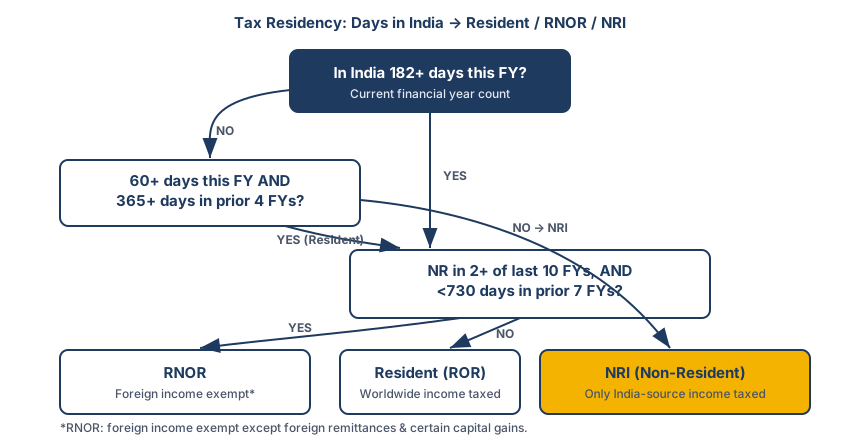
Residency at a Glance
The flow below summarises how your days in India drive your status — start from the 182-day test, fall through to the 60-day rule, and (if you are Resident) the RNOR test that can keep most foreign income exempt for returning NRIs.
Old vs New Tax Regime Comparison
Understanding the Two Tax Regimes
From FY 2023-24, the Income Tax Act provides two tax regimes:
Old Regime: Traditional tax structure with various deductions and exemptions New Regime: Simplified structure with lower rates but limited deductions
Both regimes are now available to all taxpayers. Choose the one that gives you lower tax liability.
Tax Rates Comparison (Tax Year 2026-27)
Old Tax Regime (Slabs)
| Income Slab | Tax Rate |
|---|---|
| Up to Rs. 3,00,000 | 0% |
| Rs. 3,00,001 - Rs. 7,50,000 | 5% |
| Rs. 7,50,001 - Rs. 10,00,000 | 10% |
| Rs. 10,00,001 - Rs. 12,50,000 | 15% |
| Rs. 12,50,001 - Rs. 15,00,000 | 20% |
| Above Rs. 15,00,000 | 30% |
Plus: Health and Education Cess @ 4% on tax
New Tax Regime (Slabs) — Tax Year 2026-27
| Income Slab | Tax Rate |
|---|---|
| Up to Rs. 4,00,000 | 0% (Nil) |
| Rs. 4,00,001 - Rs. 8,00,000 | 5% |
| Rs. 8,00,001 - Rs. 12,00,000 | 10% |
| Rs. 12,00,001 - Rs. 16,00,000 | 15% |
| Rs. 16,00,001 - Rs. 20,00,000 | 20% |
| Rs. 20,00,001 - Rs. 24,00,000 | 25% |
| Above Rs. 24,00,000 | 30% |
Plus: Health and Education Cess @ 4% on tax
The chart below shows the marginal rate that applies to each new-regime slab — note the rate only climbs once income crosses each threshold; income below a band is still taxed at the lower rates.
New-Regime Marginal Rate by Slab (Tax Year 2026-27)
FY 2026-27 new regime. Section 157 rebate means no tax up to ₹12L of taxable income.
Because of the Section 157 rebate (up to ₹60,000), taxable income up to ₹12,00,000 attracts no net tax at all. Above that, total tax (before 4% cess) climbs steadily:
New-Regime Tax Payable by Taxable Income (Tax Year 2026-27)
Illustrative, FY 2026-27 new regime, before 4% cess. ₹0 up to ₹12L due to the Section 157 rebate.
Key new-regime features (Tax Year 2026-27, unchanged from FY 2025-26):
- Basic exemption: Rs. 4,00,000
- Section 157 rebate (formerly the Section 87A rebate): up to Rs. 60,000, which effectively means no tax up to Rs. 12,00,000 of taxable income
- Standard deduction (salary/pension): Rs. 75,000
- The new regime is the default; traditional deductions such as 80C/PPF/ELSS are not available under it
Key Deductions Available in Old Regime Only
Income Tax Act 2025 note: From 1 April 2026, several deduction sections are renumbered. Section 80C is now Section 123, Section 80D is now Section 126, and the 87A rebate is now Section 157 (all still available under the old regime only, as before). The amounts and limits are unchanged; only the section numbers have changed. This guide continues to use the familiar "80C / 80D" labels for clarity, with the new section numbers noted.
| Deduction | Section | Limit |
|---|---|---|
| Life Insurance Premium | 80C | Rs. 1,50,000 |
| Provident Fund Contribution | 80C | Included in 80C |
| Home Loan Principal | 80C | Included in 80C |
| Tuition Fees | 80C | Included in 80C |
| Sukanya Samriddhi Scheme | 80C | Included in 80C |
| Medical Insurance Premium | 80D | Rs. 25,000 (30,000 for parents) |
| Interest on Home Loan | 80EH | Rs. 5,00,000 |
| Higher Education Loan Interest | 80E | No limit |
| Donations (80G) | 80G | No limit (50% or 100% deduction) |
| Senior Citizens' Savings Interest | 80SSA | Rs. 50,000 |
Standard Deduction in New Regime
- Salaried individuals: Rs. 75,000 (fixed)
- Not available in Old Regime
Capital Gains Tax Rates (Tax Year 2026-27)
Capital gains are taxed at special rates that are independent of the slab table above and apply under both regimes. These rates are unchanged for Tax Year 2026-27:
| Asset / Gain Type | Rate |
|---|---|
| STCG on listed equity / equity mutual funds (Section 111A) | 20% |
| LTCG on listed equity / equity mutual funds (Section 112A) | 12.5%, with the first Rs. 1,25,000 of such LTCG per year exempt |
| LTCG on other assets / immovable property (held 24+ months) | 12.5% (without indexation) |
Surcharge and 4% cess apply on top where relevant. For NRIs, TDS on the sale of property is generally deducted on the LTCG at 12.5% (plus surcharge and cess); a lower-deduction certificate under Section 197 can be obtained where the actual tax is lower.
Case Study 1: Salaried NRI Choosing Regime
Profile:
- Name: Aditya (NRI working in USA)
- Gross Salary: Rs. 20,00,000
- NRI Account Interest: Rs. 2,00,000
- Rental Income from India: Rs. 5,00,000
- Total Income: Rs. 27,00,000
Scenario A: Old Regime
- Salary: Rs. 20,00,000
- Interest: Rs. 2,00,000
- Rental Income: Rs. 5,00,000
- Less: 80C deductions (LIC + ELSS): Rs. 1,50,000
- Less: 80D deductions (Health Insurance): Rs. 25,000
- Taxable Income: Rs. 24,25,000
- Tax Calculation:
- 0% on Rs. 3,00,000 = 0
- 5% on Rs. 4,50,000 = 22,500
- 10% on Rs. 2,50,000 = 25,000
- 15% on Rs. 2,50,000 = 37,500
- 20% on Rs. 2,50,000 = 50,000
- 30% on Rs. 8,75,000 = 2,62,500
- Total Tax: Rs. 3,97,500
- Plus Cess (4%): Rs. 15,900
- Total Tax + Cess: Rs. 4,13,400
Scenario B: New Regime
- Salary: Rs. 20,00,000
- Interest: Rs. 2,00,000
- Rental Income: Rs. 5,00,000
- Less: Standard Deduction: Rs. 75,000
- Taxable Income: Rs. 26,25,000
- Tax Calculation:
- 0% on Rs. 3,00,000 = 0
- 5% on Rs. 3,00,000 = 15,000
- 10% on Rs. 3,00,000 = 30,000
- 15% on Rs. 3,00,000 = 45,000
- 20% on Rs. 3,00,000 = 60,000
- 30% on Rs. 10,25,000 = 3,07,500
- Total Tax: Rs. 4,57,500
- Plus Cess (4%): Rs. 18,300
- Total Tax + Cess: Rs. 4,75,800
Result: Old Regime is better by Rs. 62,400 (Old: Rs. 4,13,400 vs New: Rs. 4,75,800)
Case Study 2: Self-Employed NRI Choosing Regime
Profile:
- Name: Priya (NRI Entrepreneur in Singapore)
- Business Income: Rs. 50,00,000
- Capital Gains: Rs. 10,00,000
- Total Income: Rs. 60,00,000
Scenario A: Old Regime
- Business Income: Rs. 50,00,000
- Capital Gains (long-term): Rs. 10,00,000
- Less: 80C deductions (NPS): Rs. 2,50,000
- Less: 80D deductions (Insurance): Rs. 25,000
- Less: 80G deductions (Donations): Rs. 5,00,000
- Taxable Income: Rs. 52,25,000
- Tax Calculation:
- 0% on Rs. 3,00,000 = 0
- 5% on Rs. 4,50,000 = 22,500
- 10% on Rs. 2,50,000 = 25,000
- 15% on Rs. 2,50,000 = 37,500
- 20% on Rs. 2,50,000 = 50,000
- 30% on Rs. 37,25,000 = 11,17,500
- Total Tax: Rs. 12,52,500
- Plus Cess (4%): Rs. 50,100
- Total Tax + Cess: Rs. 13,02,600
Scenario B: New Regime
- Business Income: Rs. 50,00,000
- Capital Gains: Rs. 10,00,000
- Taxable Income: Rs. 60,00,000
- Tax Calculation:
- 0% on Rs. 3,00,000 = 0
- 5% on Rs. 3,00,000 = 15,000
- 10% on Rs. 3,00,000 = 30,000
- 15% on Rs. 3,00,000 = 45,000
- 20% on Rs. 3,00,000 = 60,000
- 30% on Rs. 44,00,000 = 13,20,000
- Total Tax: Rs. 14,70,000
- Plus Cess (4%): Rs. 58,800
- Total Tax + Cess: Rs. 15,28,800
Result: Old Regime is better by Rs. 2,26,200 (Old: Rs. 13,02,600 vs New: Rs. 15,28,800)
Old vs New Regime: Side-by-Side
Across both case studies above, the deductions available to these NRIs (80C, 80D, 80G) made the old regime cheaper. The chart compares the total tax-plus-cess from each scenario:
Total Tax + Cess: Old vs New Regime (Tax Year 2026-27)
From the two case studies above, FY 2026-27. Old regime wins here because of available deductions; always compare both for your own numbers.
Decision Tree: Which Regime to Choose?
Do you have significant deductions available?
├─ YES → Can you use Rs. 1,50,000+ in 80C?
│  ├─ YES → Choose OLD REGIME
│  └─ NO → Compare both scenarios
└─ NO → Choose NEW REGIME
DTAA Benefits by Country
What is DTAA?
DTAA (Double Taxation Avoidance Agreement) is a bilateral treaty between India and another country to prevent double taxation of the same income.
Without DTAA: You could pay tax in both countries on the same income With DTAA: You can claim relief through:
- Foreign Tax Credit (pay tax in one country, claim credit in other)
- Exemption Method (income not taxed in one country)
Key DTAA Principles
Rule of Tie-Breaker: If your income is taxable in both countries, DTAA determines which country has taxing rights
Permanent Establishment (PE): If you don't have a PE in India, business profits may not be taxable there
Beneficial Owner Test: You must be the actual owner to claim DTAA benefits (not a nominee)
USA-India DTAA
Applicable To: US citizens, Green Card holders, Indian citizens working in USA
Income Classification & Tax Rights
| Income Type | India's Right | USA's Right | Taxable Where |
|---|---|---|---|
| Salary | YES | YES | Where Services Rendered |
| Self-Employment Income | YES | YES | Country of Permanent Establishment |
| Capital Gains | YES | NO | Country of Residence |
| Dividend | YES | YES | Country of Residence* |
| Interest | YES | YES | Country of Beneficial Owner |
| Rent/Royalties | YES | YES | Country of Payer |
*India can tax if shares owned >25%
Key DTAA Benefits for USA NRIs
1. Salary/Employment Income
- Tax paid in USA can be claimed as credit in India
- No double taxation
Example:
- Salary earned in USA: $100,000 (~Rs. 83,00,000)
- US tax rate: 22% = $22,000 tax paid
- Indian tax rate: 30% = Rs. 24,90,000 tax
- Use US tax paid as credit: Rs. 24,90,000 - Rs. 18,26,000 = Rs. 6,64,000 (net India tax)
- Total tax: Rs. 22,00,000 + Rs. 6,64,000 = Rs. 28,64,000 (approximately 34.5% combined)
2. Capital Gains
- Long-term capital gains are NOT taxable in India if you're a US resident
- Only USA taxes these gains
3. Dividend Income
- If you own <25% shares: Not taxable in India
- Only USA taxes the dividend
- Saves India tax of 31.2% (20% + 4% surcharge + 4% cess)
Example:
- Dividend received from US company: $10,000
- Taxed only in USA at 15% = $1,500
- If taxed in India also: $10,000 × 31.2% = $3,120 (additional)
- DTAA Saving: $1,620
4. Professional Service Income
- Income from independent services NOT taxable in India if:
- No permanent establishment in India
- Income not from services rendered in India
India-USA DTAA Relief Methods
Foreign Tax Credit Method (Preferred for most NRIs):
- Calculate tax in India on worldwide income
- Deduct actual US tax paid as credit
- Pay only the difference
Formula:
Net Indian Tax = (Indian Tax on Worldwide Income) - (Lower of: US Tax Paid OR Indian Tax on US Income)
Filing Requirements for US NRIs
- Form 10F to reduce TDS on interest income
- ITR-2 if you have US income
- Schedule FA for foreign assets
- FBAR/FATCA for US reporting
UK-India DTAA
Applicable To: UK citizens, Visa holders, Indian citizens working in UK
Income Classification & Tax Rights
| Income Type | India's Right | UK's Right | Taxable Where |
|---|---|---|---|
| Employment Income | YES | YES | Where Services Rendered |
| Business Profits | YES | YES | Country of PE |
| Capital Gains | YES | NO | Country of Residence |
| Dividend | YES | YES | Country of Residence |
| Interest | YES | YES | Beneficial Owner's Country |
Key DTAA Benefits for UK NRIs
1. Salary Income
- Employees working in UK: Taxed only in UK (no India tax if not in India)
- Employees working in India: Taxed only in India
2. Capital Gains
- Long-term capital gains NOT taxable in India for UK residents
- Only UK taxes these gains
3. Interest Income
- Taxed at beneficial owner's country
- UK NRIs can claim DTAA relief from 20% TDS
Example:
- NRI Account Interest: Rs. 5,00,000
- Without DTAA Relief: TDS at 20% = Rs. 1,00,000
- With Form 10F: Reduced TDS at 10% = Rs. 50,000
- Annual Saving: Rs. 50,000
India-UK DTAA Relief Methods
Foreign Tax Credit: Available for UK tax paid Exemption Method: Some income exempt from India tax
Filing Requirements for UK NRIs
- Form 10F for interest income (reduces TDS to 10%)
- ITR-2 for foreign employment income
- UK tax return (Self Assessment) for income from India
UAE-India DTAA
Applicable To: UAE residents, Indian citizens working in UAE
Key Features
- No Personal Income Tax in UAE: This makes UAE highly tax-efficient for NRIs
- DTAA Benefits: Dividends, interest, royalties are not taxed in India if from UAE
Income Classification & Tax Rights
| Income Type | India's Right | UAE's Right | Taxable Where |
|---|---|---|---|
| Employment Income | YES | NO | Only India if from UAE sources |
| Business Profits | YES | NO | Only India if from UAE sources |
| Capital Gains | YES | NO | No tax anywhere |
| Dividend | NO | NO | No tax anywhere |
| Interest | NO | NO | No tax anywhere |
Key DTAA Benefits for UAE NRIs
The UAE Advantage:
- Earn income in UAE (no UAE tax)
- No tax in India on non-Indian source income (DTAA benefit)
- Only pay tax in India on Indian income
Example:
- Salary from UAE company: Rs. 50,00,000
- Rental income from India: Rs. 10,00,000
- Interest from NRI Account: Rs. 2,00,000
Tax Calculation:
- Salary from UAE: 0% tax in UAE + 0% in India (DTAA) = Rs. 0
- Rental income: Taxable in India at 30% = Rs. 3,00,000
- Interest from NRI: Taxed in India at 20% (TDS) = Rs. 40,000
- Total Tax: Rs. 3,40,000
- Effective Rate: 5.2% (vs 30%+ for resident Indians)
Important Note on UAE DTAA
Requirement: You must not have a "permanent establishment" in India. If you:
- Have an office/business place in India
- Have a dependent agent in India
- Then business income will be taxable in India
Filing Requirements for UAE NRIs
- Form 10F for interest income
- ITR-2 (even if no tax liability, for documentation)
- UAE employment contract as supporting document
- PAN mandatory for any India income
Canada-India DTAA
Applicable To: Canadian citizens, PR holders, Indian citizens working in Canada
Income Classification & Tax Rights
| Income Type | India's Right | Canada's Right | Taxable Where |
|---|---|---|---|
| Employment Income | YES | YES | Where Services Rendered |
| Business Profits | YES | YES | Country of PE |
| Capital Gains | NO | YES | Only Canada |
| Dividend | YES | YES | Country of Residence |
| Interest | YES | YES | Beneficial Owner's Country |
Key DTAA Benefits for Canada NRIs
1. Capital Gains
- Zero tax in India on capital gains
- Only taxed in Canada (at 50% inclusion rate = ~27% effective tax)
Example:
- Capital gain from sale of shares: CAD $50,000 (~Rs. 30,00,000)
- Canada tax: CAD $50,000 × 50% × 27% = CAD $6,750
- India tax: Would be Rs. 9,00,000 without DTAA
- DTAA Saving: Rs. 8,32,500
2. Dividend Income
- Canadian dividends NOT taxable in India if paid from Canada
- Only Canadian tax applies
3. Employment Income
- Income earned in Canada: Not taxed in India
- Clean DTAA relief
India-Canada DTAA Relief Methods
- Foreign Tax Credit for Canadian tax paid
- Exemption Method for capital gains (fully exempt in India)
Filing Requirements for Canada NRIs
- Form 10F for interest income (if receiving NRI account interest)
- ITR-2 for Indian income
- Canadian T1 Tax Return for income sources in Canada
Singapore-India DTAA
Applicable To: Singapore citizens, PR/EP holders, Indian citizens working in Singapore
Income Classification & Tax Rights
| Income Type | India's Right | Singapore's Right | Taxable Where |
|---|---|---|---|
| Employment Income | YES | YES | Where Services Rendered |
| Business Profits | YES | YES | Country of PE |
| Capital Gains | YES | NO | Only India |
| Dividend | YES | YES | Country of Residence |
| Interest | YES | YES | Beneficial Owner's Country |
Key DTAA Benefits for Singapore NRIs
1. Employment Income
- Income earned in Singapore: Not taxed in India
- DTAA protection from India tax
Example:
- Salary from Singapore company: SGD 150,000 (~Rs. 90,00,000)
- Singapore tax rate: 15-22% (depending on income) = ~SGD 20,000
- Without DTAA: India tax @ 30% = Rs. 27,00,000
- With DTAA: 0% India tax
- DTAA Saving: Rs. 27,00,000 (approximately SGD 45,000)
2. Interest Income
- Singapore source interest NOT taxable in India
- Only Singapore tax (if any)
3. Capital Gains
- Taxable in India only
- Singapore does not have capital gains tax
- No DTAA relief available
India-Singapore DTAA Relief Methods
- Foreign Tax Credit for Singapore tax
- Exemption Method for employment income (if no PE in India)
Filing Requirements for Singapore NRIs
- Form 10F for interest income
- ITR-2 for other income sources
- Singapore work permit/EP certificate
Australia-India DTAA
Applicable To: Australian citizens, PR holders, Indian citizens working in Australia
Income Classification & Tax Rights
| Income Type | India's Right | Australia's Right | Taxable Where |
|---|---|---|---|
| Employment Income | YES | YES | Where Services Rendered |
| Business Profits | YES | YES | Country of PE |
| Capital Gains | YES | YES | Country of Residence |
| Dividend | YES | YES | Country of Residence |
| Interest | YES | YES | Beneficial Owner's Country |
| Rental Income | YES | YES | Country of Residence |
Key DTAA Benefits for Australia NRIs
1. Employment Income
- Income earned in Australia: Taxed only in Australia
- No India tax (DTAA relief)
Example:
- Salary from Australian employer: AUD 150,000 (~Rs. 75,00,000)
- Australia tax rate: ~37.5% (including Medicare Levy) = AUD 56,250
- Without DTAA: India tax @ 30% = Rs. 22,50,000 (on top)
- With DTAA: No India tax
- DTAA Saving: Rs. 22,50,000 (approximately AUD 45,000)
2. Capital Gains
- Taxable in country of residence
- Australian residents: Taxed only in Australia
- 50% CGT discount in Australia on assets held 12+ months
- No tax in India
Example:
- Capital gain from share sale: AUD 100,000
- Australia tax (50% inclusion, 37.5% rate): AUD 18,750
- Without DTAA: India tax @ 20% = AUD 20,000
- DTAA Saving: AUD 1,250 + deferral benefit
3. Dividend Income
- Paid in Australia: Taxed only in Australia (45% tax rate but with franking credits)
- Effective tax: ~27-30% after franking credits
India-Australia DTAA Relief Methods
- Foreign Tax Credit for Australian tax paid
- Foreign Earned Income Exemption (similar to RNOR benefit)
Filing Requirements for Australia NRIs
- Form 10F for interest income
- ITR-2 for other Australian-sourced income
- Australian Tax Return (Tax File Number required)
- FATCA/CRS compliance
Tax-Saving Investment Strategies
Section 80C Deductions (Rs. 1,50,000 Limit)
(Section 123 under the Income Tax Act 2025, effective 1 April 2026 — same Rs. 1,50,000 limit, old regime only.)
What Qualifies for 80C?
| Investment/Payment | Limit | NRI Eligibility | Benefit |
|---|---|---|---|
| Life Insurance Premium | Part of 80C | Full | Deduction + Insurance |
| Public Provident Fund (PPF) | Part of 80C | Yes | Tax-free growth |
| National Savings Certificates (NSC) | Part of 80C | Yes | Tax-free maturity |
| Sukanya Samriddhi Scheme | Part of 80C | Yes (if girl child) | Tax-free growth |
| Home Loan Principal Repayment | Part of 80C | Yes | Deduction |
| Tuition Fees (Children's Education) | Part of 80C | Yes | Deduction |
| ELSS Mutual Funds | Part of 80C | Yes | Tax-free growth + growth potential |
| Employee Provident Fund (EPF) | Part of 80C | Only if in India | Deduction + Tax-free |
Total Combined Limit: Rs. 1,50,000 per financial year
PPF (Public Provident Fund) - Best for NRIs
Features:
- 15-year maturity period
- Interest rate: 7.1% p.a. (for 2025-26)
- Complete exemption from income tax
- Can withdraw from 7th year onwards
Example:
- Annual PPF investment: Rs. 1,00,000 (for 15 years)
- Total investment: Rs. 15,00,000
- Interest earned (at 7.1%): Rs. 10,07,500 (approximately)
- Total Maturity Value: Rs. 25,07,500
- Tax on Interest: Rs. 0 (completely exempt)
- If same investment in bank account (5% interest):
- Interest: Rs. 5,00,000
- Tax on interest @ 20% (with surcharge): Rs. 1,08,000
- Net interest: Rs. 3,92,000
- PPF Benefit: Rs. 6,15,500 more (Rs. 10,07,500 - Rs. 3,92,000)
ELSS Mutual Funds - Growth + Tax Benefits
Features:
- 3-year lock-in period
- Equity-linked, so returns are market-linked and not assured (historically ELSS funds have delivered roughly 12-15% p.a. over long periods, but past performance does not guarantee future returns)
- Dividend and growth options
- Section 80C deduction available
Example:
- Annual ELSS investment: Rs. 50,000 (for 10 years)
- Total investment: Rs. 5,00,000
- Assumed return: 12% p.a.
- Final value: Rs. 9,76,520
- Tax-free growth (no capital gains tax on long-term investments)
- Plus Section 80C deduction: Rs. 50,000 × 30% = Rs. 15,000 annual tax saving
Comparison: ELSS vs Bank FD
| Parameter | ELSS | Bank FD |
|---|---|---|
| Initial Investment | Rs. 50,000 | Rs. 50,000 |
| Period | 10 years | 10 years |
| Annual Return | 12% | 5% |
| Final Value | Rs. 97,650 | Rs. 81,445 |
| Tax on Gains | 0% (long-term) | 30% (interest @ 5%) = Rs. 9,445 |
| Net Final Value | Rs. 97,650 | Rs. 72,000 |
| 80C Deduction Benefit | Rs. 15,000 (annually) | 0 |
| Total Benefit | Rs. 97,650 + (Rs. 15,000 × 10) = Rs. 247,650 | Rs. 72,000 |
Section 80D - Medical Insurance Premium
(Section 126 under the Income Tax Act 2025, effective 1 April 2026 — limits unchanged.)
Limit: Rs. 25,000 (for self + spouse + children) Additional Limit: Rs. 30,000 (for parents) if they are senior citizens (Rs. 25,000 if not senior citizens) Total Possible Deduction: Rs. 55,000
Why Medical Insurance is Smart for NRIs
1. Dual Coverage
- Insurance covers you in India and abroad
- Peace of mind for health emergencies
2. Tax Deduction
- Reduces your taxable income
- Gets you Section 80D benefit
3. No Claim Bonus
- Premium remains constant even with claims
- Bonus adds to sum insured
Example:
- Family Medical Insurance Premium: Rs. 25,000/year
- Tax saving @ 30%: Rs. 7,500
- Net cost: Rs. 17,500
- If claim happens: Additional Rs. 7,500 saved (no tax surcharge on withdrawal)
Choosing Health Insurance as an NRI
Several insurers offer health plans suitable for NRIs; compare coverage, network and pre-existing terms. When evaluating options, consider:
| Factor | What to Check |
|---|---|
| Sum insured | Typically Rs. 25-75 lakhs depending on plan and age |
| Geographic coverage | Whether the plan covers treatment in India only, or also abroad / multi-country |
| Pre-existing conditions | Waiting periods and disclosure requirements |
| Network hospitals | Cashless network in the cities you need |
| Claim settlement | Insurer's claim settlement ratio and process |
This is general educational information only and not a recommendation of any specific insurer or plan. Compare current policy documents and terms before purchasing.
Section 80CCD - NPS (National Pension Scheme)
Employee Contribution Limit:
- Regular employee: Rs. 50,000 (part of 80C limit of Rs. 1,50,000)
- Can increase to Rs. 2,00,000 (above 80C limit of Rs. 1,50,000)
Employer Contribution Limit:
- Rs. 1,75,000 (above 80C limit)
Additional Benefit: Rs. 50,000 extra deduction under 80CCD(1B) on top of 80C limit
NPS Tax Advantages
1. Triple Tax Exemption
- Contribution: Tax deductible
- Growth: Tax-free
- Maturity: 40% received tax-free, rest as annuity
2. High Long-Term Returns
- Equity-focused fund: 10-12% p.a. historical average
- Balanced fund: 8-9% p.a.
Example:
- Annual NPS contribution: Rs. 2,00,000 (for 20 years until retirement)
- Total contribution: Rs. 40,00,000
- Assumed return: 10% p.a.
- Final corpus: Rs. 1,37,43,000 (approximately)
- At retirement (age 60):
- 40% can be withdrawn tax-free: Rs. 54,97,200
- Rest (60%) used for annuity: Rs. 82,45,800
- Tax saved (over 20 years): Rs. 40,00,000 × 30% = Rs. 12,00,000
Section 80E - Interest on Education Loan
Limit: No limit (can deduct full interest amount) Available For: Self, spouse, children, dependents
Key Benefit: Deduction available even in New Tax Regime
How It Works
- Can deduct interest paid on education loan
- Principal repayment is not deductible
- Loan must be from approved source
- Applies to education from Nursery to PG level
Example:
- Education Loan Amount: Rs. 50,00,000
- Interest paid in FY 2025-26: Rs. 3,00,000
- Deduction available: Rs. 3,00,000
- Tax saving @ 30%: Rs. 90,000
- Effective cost of education: Rs. 2,10,000
Section 80EH - Interest on Home Loan
Limit: Rs. 5,00,000 per financial year Available From: FY 2024-25 onwards (New Rule) Available In: Old Regime only
Key Points
- Deduction on interest only, not principal
- For self-occupied property only
- Can be claimed by co-owners separately
Example:
- Home Loan Amount: Rs. 50,00,000
- Interest paid in FY 2025-26: Rs. 3,50,000
- Deduction available: Rs. 3,50,000 (within Rs. 5,00,000 limit)
- Tax saving @ 30%: Rs. 1,05,000
Home Loan Interest Deduction vs Principal Deduction
| Aspect | Under 80EH | Under 24 (Old) |
|---|---|---|
| Deduction Limit | Rs. 5,00,000 | Rs. 2,00,000 |
| Applicable To | Interest | Interest |
| Available In | Old Regime | Old Regime |
| Self-occupied property | Yes | Yes |
| Let-out property | No | Cannot use 80EH |
Section 80G - Donations (50% and 100% Deductions)
Limit: No limit for qualifying donations Available In: Old Regime only
Qualifying Donations
| Organization | Deduction |
|---|---|
| National Foundation for Communal Harmony | 100% |
| National Centre for Excellence in Journalism | 100% |
| Prime Minister's National Relief Fund | 100% |
| Political Parties | 100% |
| Approved Charitable Institutions | 50% |
| Educational Institutions | 50% |
| Religious Institutions | 50% |
| Medical Institutions | 50% |
| Scientific Research | 50% |
Example:
- Donation to approved charity: Rs. 2,00,000
- 50% deduction available: Rs. 1,00,000
- Tax saving @ 30%: Rs. 30,000
- Net cost of donation: Rs. 1,70,000
Section 80SSA/80SSB - Senior Citizens' Savings
80SSA - Interest on Savings
- Limit: Rs. 50,000
- For senior citizens (60+ years)
- On savings account, FDs, etc.
80SSB - Tax Relief
- Limit: Rs. 50,000
- Senior citizens earning up to Rs. 5,00,000
- Available on specified income
Investment Strategy Table for NRIs
| Investment | 80C | Limit | NRI Eligible | Tax Benefit | Growth Potential |
|---|---|---|---|---|---|
| PPF | Yes | Part of 1,50,000 | Yes | Exempt | 7.1% p.a. |
| ELSS | Yes | Part of 1,50,000 | Yes | Exempt | Market-linked; ~10-15% p.a. historical, not assured |
| NSC | Yes | Part of 1,50,000 | Yes | Exempt | 5.5% p.a. |
| NPS | Yes | Rs. 2,00,000 | Yes | Tax-free corpus (40%) | 10-12% p.a. |
| Health Insurance | 80D | Rs. 25-30,000 | Yes | Deduction | Safety |
| Home Loan Interest | 80EH | Rs. 5,00,000 | Yes | Deduction | Real estate appreciation |
| Education Loan Interest | 80E | No limit | Yes | Deduction | Future earnings |
TDS Rates on Different Income Types
What is TDS?
TDS (Tax Deducted at Source) is tax collected at the time of payment rather than at the end of year.
For NRIs: TDS is often at higher rates (no deductions allowed)
TDS Rates for NRIs (Tax Year 2026-27)
Interest Income (Sections 193, 194A, 194LA)
| Income Type | Resident Rate | NRI Rate | Conditions |
|---|---|---|---|
| Interest on Bank Accounts | 10% | 20% | No 80TTA limit for NRIs |
| Interest on Post Office Savings | 10% | 20% | Higher rate applies |
| Interest on Senior Citizen Savings Scheme | Exempt if <50K | 20% | No exemption for NRIs |
| Interest on NRI Account | 10%* | 10-20% | Can use Form 10F |
| Interest on Bonds/Securities | 10% | 20% | Unless DTAA applies |
*If Form 10F submitted
Dividend Income (Section 194)
| Income Type | Resident Rate | NRI Rate | Notes |
|---|---|---|---|
| Dividend from Listed Companies | 20% | 20% | Unless DTAA applies |
| Dividend from Unlisted Companies | 20% | 20% | DTAA may reduce |
| Dividend from Mutual Funds | 20% | 20% | Or pass-through TDS |
Rent Income (Section 194IB)
| Income Type | Resident Rate | NRI Rate | Conditions |
|---|---|---|---|
| Rent from Property | 10% | 30% | If >Rs. 5,00,000/year |
| Commercial Property | 10% | 30% | Higher rate for NRIs |
Professional Fees (Section 194J)
| Income Type | Resident Rate | NRI Rate | Conditions |
|---|---|---|---|
| Professional Services | 10% | 20% | If >Rs. 30,000/year |
| Consulting Fees | 10% | 20% | If >Rs. 30,000/year |
| Commission | 10% | 20% | If >Rs. 30,000/year |
Contractor/Artisan Payments (Section 194C)
| Payment Type | Rate | NRI Rate | Threshold |
|---|---|---|---|
| Contractor (construction) | 1% | 2% | >Rs. 2,50,000 |
| Artisan/supplier | 2% | 2% | >Rs. 1,00,000 |
Securities Transactions (Section 194LD)
| Transaction | Rate | NRI Rate | Notes |
|---|---|---|---|
| Brokerage on securities | 10% | 20% | Stock market transactions |
TDS Refunds for NRIs
When Can You Claim Refund?
- If TDS exceeds your actual tax liability
- If you have no taxable income (losses)
- If you file ITR with supporting documents
Example:
- TDS deducted on interest: Rs. 1,00,000 (20%)
- Your actual tax liability: Rs. 60,000
- Refund claim: Rs. 40,000
- Processing time: 4-6 weeks (if electronically filed)
Form 10F for Lower TDS
What is Form 10F?
Form 10F is a certificate that allows NRIs to claim reduced TDS rates on:
- Interest income
- Dividends (in some cases)
- Capital gains from securities
Eligibility for Form 10F
You can apply for Form 10F if:
- You are a Non-Resident (as per tax residency definition)
- The income is covered by DTAA (applicable country)
- The income is not taxable in India as per DTAA benefits
- DTAA provides relief to the specific income type
Countries Where Form 10F is Most Beneficial
| Country | Original Rate | Reduced Rate | Benefit |
|---|---|---|---|
| USA | 20% | 10% (interest) | Rs. 50,000 per year on Rs. 5L interest |
| UK | 20% | 10% (interest) | Rs. 50,000 per year |
| Canada | 20% | 0% (dividends) | Dividend income exempt |
| UAE | 20% | 0% (interest) | Complete exemption |
| Singapore | 20% | 5-10% (interest) | Rs. 25,000 per year on Rs. 5L interest |
| Australia | 20% | 10% (interest) | Rs. 50,000 per year |
How to Apply for Form 10F
Step 1: Verify DTAA Coverage
Check if your country has DTAA and your income is covered:
- Visit www.incometax.gov.in
- Check "DTAA Relief" section
- Confirm income type and rate
Step 2: Gather Documents
Required Documents:
- Passport (proof of residency abroad)
- Visa stamp or employment letter
- Latest bank statement (showing foreign address)
- Declaration of non-residency
- DTAA certificate (if available)
- PAN card copy
- Foreign income proof (salary letter, dividend statement, etc.)
Step 3: Fill Form 10F
Form 10F Sections:
Section 1: Personal Details
- PAN
- Name
- Address in India (NRO account or family address)
- Address abroad (current residential address)
- Country of residence
Section 2: Income Details
- Type of income (interest, dividend, capital gains)
- Amount of income expected
- Expected TDS rate without relief
- Expected TDS rate with relief
Section 3: DTAA Declaration
- DTAA country applicable
- Article number from DTAA
- Declaration that income not taxable in India
Section 4: Declaration
- "I hereby declare that..."
- Sign and date
Step 4: Submit Form 10F
Submission Method:
- Direct Submission: Take personally to nearest Income Tax office
- By Post: Send to relevant Income Tax Assessing Officer
- E-filing: Use income-tax.gov.in portal (for some deductors)
- To Deductor: Submit to bank or dividend-paying company directly
Processing Time: 5-15 days (from receipt)
Step 5: Maintain Documentation
Keep Form 10F copy and all supporting documents for:
- 7 years (per IT Act requirements)
- ITR filing proof
- TDS receipt from deductors
Form 10F Filing Examples
Example 1: US NRI Claiming Interest Relief
Scenario:
- NRI: Vivek (USA resident on H-1B visa)
- NRI Account Interest: Rs. 5,00,000
- Normal TDS rate: 20% = Rs. 1,00,000
- DTAA Rate for US: 10% on interest
- Form 10F Claim: Reduce to 10% = Rs. 50,000
Documents Needed:
- H-1B visa stamp copy
- US employment letter
- Passport bio-page
- NRO account statement (showing foreign address)
- PAN
Form 10F Declaration:
- Income type: Interest on NRI Account
- Amount: Rs. 5,00,000
- DTAA Relief: US-India DTAA Article 11
- Expected relief: 50% (from 20% to 10%)
Result:
- TDS saved: Rs. 50,000 (annually)
- Over 5 years: Rs. 2,50,000 saved
Example 2: UAE NRI Claiming Complete Relief
Scenario:
- NRI: Priya (UAE resident on employment visa)
- Interest from NRI Account: Rs. 10,00,000
- Normal TDS rate: 20% = Rs. 2,00,000
- UAE-India DTAA Rate: 0% (interest from non-Indian source not taxable)
- Form 10F Claim: 0% TDS = Rs. 0
Documents Needed:
- UAE employment visa/passport
- Employment letter from UAE employer
- Bank statement showing UAE address
- PAN
Form 10F Declaration:
- Income type: Interest on NRI Account (from foreign source)
- Amount: Rs. 10,00,000
- DTAA Relief: UAE-India DTAA Article on Interest
- Expected relief: 100% (from 20% to 0%)
Result:
- TDS saved: Rs. 2,00,000 (annually)
- Over 5 years: Rs. 10,00,000 saved
- This covers entire NRI account interest for NRIs in UAE
Example 3: UK NRI with Multiple Income Types
Scenario:
- NRI: Rajesh (UK resident on work visa)
- Interest from NRI Account: Rs. 3,00,000
- Dividend from Indian company: Rs. 2,00,000
- Normal TDS rates: 20% interest + 20% dividend = Rs. 1,00,000
- With Form 10F: 10% interest (no relief on dividend from India)
Form 10F Details:
- Separate entry for interest: Rs. 3,00,000 @ 10% = Rs. 30,000
- Dividend: Rs. 2,00,000 @ 20% = Rs. 40,000 (no DTAA relief)
- Total TDS after Form 10F: Rs. 70,000
Result:
- TDS saved: Rs. 30,000 (annually) on interest portion
Common Mistakes in Form 10F Filing
| Mistake | Consequence | How to Avoid |
|---|---|---|
| Wrong DTAA article cited | Claim rejection | Check DTAA text from tax authority website |
| Income includes Indian source | Claim rejection | Exclude Indian-sourced income |
| Incomplete documents | Delayed processing | Submit all required documents at once |
| Wrong country of residency | Claim rejection | Must match passport and visa |
| Claiming on income taxable in India | Audit risk | Confirm DTAA exempts the income in India |
Form 10F Validity and Renewal
Validity Period:
- Issued for financial year
- Must be renewed for each FY if circumstances unchanged
- Can submit same form with modified income amount
When to Renew:
- Change of country/residency status
- Change of income amount significantly
- Change of income type
- Expiry of current certificate
Filing ITR as NRI
Which ITR Form to File?
| Situation | ITR Form | Requirement |
|---|---|---|
| Only salary income (no foreign income) | ITR-1 | Limited to residents only |
| Salary + other income | ITR-2 | Applicable for NRIs with foreign income |
| Self-employed/Business income | ITR-3 | NRIs with business income |
| Foreign income only (no India income) | Form 10F only | ITR not mandatory but may file for record |
ITR-2 for NRIs with Salary + Foreign Income
When to File ITR-2
You must file ITR-2 if you are an NRI with:
- Salary income (from any source)
- Foreign income subject to tax in India
- Capital gains
- Income from multiple sources
You should file ITR-2 if:
- You want to claim refund of excess TDS
- You want to carry forward losses
- You want documentation of DTAA relief claimed
Key Sections in ITR-2
Part A: Personal Information
- PAN, Name, Address
- Residential status (mark as NRI)
- Residential address in India
Part B: Income Details
- Salary income (Section 1)
- Income from house property (Section 2)
- Capital gains (Section 3)
- Income from other sources (Section 4)
- Foreign income (Section 5) - Important for NRIs
Part C: Deductions
- Section 80C, 80D, 80E, etc.
- Only applicable deductions for NRIs
- Cannot claim deductions on non-taxable foreign income
Part D: Tax Calculation
- Taxable income
- Tax liability
- Tax already paid (TDS)
- Tax payable/refund due
Part E: DTAA Relief - Critical for NRIs
- Country of residence
- Tax paid in foreign country
- DTAA relief claimed
- Foreign Tax Credit calculation
ITR-2 Sample: NRI Working in USA
Profile:
- Rohit: NRI working in USA (H-1B visa)
- US Salary: $120,000 (~Rs. 99,60,000)
- India Rental Income: Rs. 6,00,000
- NRI Account Interest: Rs. 1,50,000
- US Tax Paid: $25,000 (~Rs. 20,75,000)
ITR-2 Calculation:
Part B: Income Details
- Salary (foreign): Rs. 99,60,000
- Rental Income (India): Rs. 6,00,000
- Interest (NRI Account): Rs. 1,50,000
- Total Income: Rs. 1,07,10,000
Part C: Deductions (Old Regime)
- 80C (NPS): Rs. 2,00,000
- 80D (Insurance): Rs. 25,000
- Rental expenses (30%): Rs. 1,80,000
- Total Deductions: Rs. 4,05,000
- Net Taxable: Rs. 1,02,70,000
Wait! DTAA Adjustment Required:
- US salary: Taxable only in USA per DTAA (India tax = 0)
- So adjust:
- Indian taxable income: Rs. 6,00,000 + Rs. 1,50,000 = Rs. 7,50,000
- Less: Deductions applicable only to India income:
- Rental expenses: Rs. 1,80,000
- 80D (50% of insurance): Rs. 12,500
- Indian Taxable Income: Rs. 5,57,500
Part D: Tax Calculation
-
Indian Taxable Income: Rs. 5,57,500
-
Tax @ 30% slab: Rs. 1,67,250
-
Plus Cess @ 4%: Rs. 6,690
-
Tax on India Income: Rs. 1,73,940
-
US Taxable Income: Rs. 99,60,000
-
US Tax Rate: 25%: Rs. 24,90,000
-
Less: TDS deducted in India on interest @ 20%: Rs. 30,000
-
Already paid in US: Rs. 20,75,000
-
Tax still payable in India: Rs. 1,73,940 - Rs. 30,000 = Rs. 1,43,940
-
(Foreign Tax Credit: Rs. 20,75,000 credited if US tax > India tax)
Part E: DTAA Relief
- Country: USA
- Provision: Article 15 (Employment Income)
- Foreign Tax Paid: Rs. 20,75,000
- Relief Claimed: Full credit on US salary (no India tax)
Result:
- Total tax liability (combined): ~Rs. 21,49,000 (approximately)
- Effective tax rate: ~19.8% (much lower than 30%)
- TDS saved through DTAA planning: ~Rs. 10,00,000
ITR-2 Sample: RNOR Status (Returning Resident)
Profile:
- Neha: Returned to India recently, RNOR status (FY 2025-26)
- Indian Salary: Rs. 60,00,000
- US Salary (earned abroad): Rs. 80,00,000
- TDS deducted on US salary in India: Rs. 10,00,000
- US Tax Paid: Rs. 16,00,000
ITR-2 with RNOR Status:
Part B: Income (RNOR adjustment)
- Indian Salary: Rs. 60,00,000 (Taxable in India)
- US Salary: Rs. 80,00,000 (NOT Taxable in India - RNOR benefit)
- Taxable in India: Rs. 60,00,000
Part C: Deductions
- 80C: Rs. 1,50,000
- 80D: Rs. 25,000
- Total Deductions: Rs. 1,75,000
- Net Taxable: Rs. 58,25,000
Part D: Tax Calculation
- Taxable Income: Rs. 58,25,000
- Tax @ slabs: Rs. 16,95,000 (approx)
- Plus Cess: Rs. 67,800
- Total Tax: Rs. 17,62,800
- Less: TDS already deducted: Rs. 10,00,000
- Tax Payable: Rs. 7,62,800
Part E: RNOR Declaration
- Mark status: RNOR (Resident but Not Ordinarily Resident)
- Foreign income: Not taxed in India
- Note: Cannot claim DTAA relief on foreign income (already exempt as RNOR)
Result:
- Tax liability: Rs. 17,62,800 (only on India income of Rs. 60L)
- If taxed as Resident: Would be Rs. 38,50,000 on Rs. 140L
- RNOR Savings: Rs. 20,87,200
ITR-3 for Self-Employed NRIs
When to File ITR-3
File ITR-3 if you are an NRI with:
- Self-employment/business income
- Professional practice income
- Partnership income
- Any other business-related income
Key Sections in ITR-3
Part A: Personal Information
- Basic details as in ITR-2
- Mark as NRI
- Business details
Part B: Profit & Loss Statement
- Detailed income statement
- All business income sources
- All business expenses
- Net business profit
Part C: Foreign Income
- Foreign business income (if any)
- Can claim DTAA relief if not taxable abroad
Part D: Deductions & Exemptions
- Section 80C, 80D, 80E, 80CCD
- Business-related deductions
- Capital allowance (if applicable)
Part E: Tax Calculation
- Similar to ITR-2
- Including TDS paid, estimated tax, etc.
ITR-3 Sample: NRI Consultant/Freelancer
Profile:
- Karan: NRI consultant in Singapore
- Consulting income from Singapore clients: Rs. 80,00,000
- Consulting income from India clients: Rs. 30,00,000
- Expenses: Rs. 25,00,000
- TDS deducted in India: Rs. 8,00,000
- Singapore tax paid: Rs. 12,00,000
ITR-3 Calculation:
Part B: Profit & Loss
- Consulting Income (Singapore): Rs. 80,00,000
- Consulting Income (India): Rs. 30,00,000
- Total Income: Rs. 1,10,00,000
- Less: Expenses: Rs. 25,00,000
- Net Profit: Rs. 85,00,000
DTAA Adjustment (Singapore):
- Singapore income: May be exempt or taxable depending on PE
- If NO Permanent Establishment in India: Not taxable
- If Permanent Establishment in India: Taxable
- Assume NO PE: Singapore income not taxable
Part C: Foreign Income
- Consulting from Singapore clients: Rs. 80,00,000 (NOT taxable - DTAA)
- Proportion of expenses allocable: Rs. 80,00,000 / Rs. 1,10,00,000 × Rs. 25,00,000 = Rs. 18,18,182
- Foreign Net Income: Rs. 61,81,818 (NOT taxable due to DTAA)
Part D: Indian Taxable Income
- Consulting from India: Rs. 30,00,000
- Less: Allocable expenses: Rs. 25,00,000 - Rs. 18,18,182 = Rs. 6,81,818
- Indian Net Income: Rs. 23,18,182
Part E: Deductions
- 80CCD(1): Rs. 2,00,000 (NPS for self-employed)
- 80D (Health Insurance): Rs. 30,000 (parents)
- Total Deductions: Rs. 2,30,000
- Final Taxable Income: Rs. 20,88,182
Tax Calculation:
- Tax @ slabs: Rs. 5,64,000 (approx)
- Plus Cess: Rs. 225,600
- Total Tax: Rs. 5,89,600
- Less: TDS paid: Rs. 8,00,000
- Refund: Rs. 2,10,400
Result:
- Refund to be received: Rs. 2,10,400
- Due to DTAA, significant portion of income (Rs. 80L) not taxed in India
- Even though TDS deducted on all income, refund comes from DTAA relief
- Effective tax rate on actual income: ~3.6% (Rs. 5,89,600 on Rs. 85L profit)
Steps to File ITR-2/ITR-3 as NRI
Step 1: Gather Documents
Essential Documents:
- PAN card
- Passport (bio-page)
- Visa stamp/residence proof
- Bank statements (both India and foreign)
- Salary slips (if employed)
- Form 16 (if applicable)
- Interest statements (NRI account, FDs, savings)
- Dividend statements
- Rental income statements
- TDS certificates (Form 16, 16A, etc.)
- Proof of DTAA country (employment letter, residence certificate)
- Foreign tax statement/receipt
- Previous year ITR copies (if amendments needed)
Step 2: Calculate Income
Build a spreadsheet with:
- All income sources (India and foreign)
- Less: Deductions applicable
- Less: TDS already paid
- = Final taxable income
Example Format:
| Income Head | Amount (Rs.) | TDS Paid (Rs.) |
|---|---|---|
| Indian Salary | 50,00,000 | 5,00,000 |
| Foreign Salary | 60,00,000 | 0 |
| Rental Income | 10,00,000 | 3,00,000 |
| Interest (NRI) | 2,00,000 | 40,000 |
| Total | 1,22,00,000 | 8,40,000 |
Step 3: Determine Tax Regime
Compare:
-
Old Regime (with deductions):
- Calculate taxable income after 80C, 80D, etc.
- Calculate tax liability
-
New Regime (without deductions except certain ones):
- Calculate taxable income with Standard Deduction only
- Calculate tax liability
Choose the regime with lower tax.
Step 4: File on Income Tax Website
Online Filing Process:
- Visit: www.incometax.gov.in
- Login: Using PAN and password
- Navigate: e-File → Income Tax Return → ITR-2/ITR-3
- Fill Details:
- Personal information
- Income details
- Deductions
- Tax calculations
- DTAA relief (if applicable)
- Review: Verify all entries
- Validate: Generate XML file
- Submit: E-sign or submit with DSC
- Track: Use acknowledgment number
Step 5: Verification
Verification Methods for NRIs:
-
E-Verification:
- Use OTP sent to registered mobile/email
- Immediate
- For most NRIs
-
DSC Verification:
- Using Digital Signature Certificate
- More secure
- Requires technical setup
-
Physical Verification:
- By post to Assessing Officer
- Take copy to local tax office
- When abroad, can authorize someone in India
Recommended: E-Verification (OTP) as it's fastest and most convenient for NRIs
Step 6: Keep Records
Maintain for 7 Years:
- ITR filed (downloaded copy)
- Acknowledgment receipt
- Proof of income (salary slips, statements)
- TDS certificates
- Foreign tax statements
- DTAA certificates/proofs
- Deduction proofs
- Bank statements
ITR Filing Timeline for NRIs
Critical Dates (FY 2025-26 — being filed during 2026):
These dates relate to income earned in FY 2025-26 (1 April 2025–31 March 2026), whose returns are filed in 2026 under the existing rules. For the next cycle, Tax Year 2026-27 (income from 1 April 2026), the equivalent deadlines shift forward by roughly one year and fall under the Income Tax Act 2025.
| Milestone | Date | Action |
|---|---|---|
| FY End | March 31, 2026 | Stop earning/transactions |
| Form 16 Receipt | June 30, 2026 | Employer provides TDS cert |
| TDS Receipts | July 31, 2026 | Collect all 16/16A certificates |
| ITR Filing Deadline | August 31, 2026 | Last date to file ITR |
| Extended Deadline | November 30, 2026 | With penalty (if applicable) |
| Carry Forward Losses | August 31, 2026 | Must file ITR to carry losses |
| Amendment ITR | November 30, 2026 | File 10F/amend ITR if needed |
Pro Tip: File ITR by July 31 to avoid hassles and get quicker refunds
FATCA/CRS Compliance
What is FATCA?
FATCA (Foreign Account Tax Compliance Act) is a US law (2010) that requires:
- Financial institutions worldwide to report US account holders to IRS
- US citizens/persons to report foreign financial accounts
Applies To:
- US citizens (living anywhere)
- US Green Card holders
- US residents
What is CRS?
CRS (Common Reporting Standard) is a global automatic exchange of information on financial accounts by 100+ countries including India.
India Automatic Exchange Partners (as of 2024):
- UK, USA, Canada, Singapore, UAE, Australia, Japan, South Korea, France, Germany, Switzerland, and 89 other countries
Key Reporting Requirements
FBAR (FinCEN Form 114)
Who Must File?
- US citizens or Green Card holders
- US residents (taxation purposes)
- Form 1040 filers with foreign accounts
Filing Requirement:
- Aggregate foreign account value > $10,000 at any time in calendar year
- Even if account closed before year-end
Account Types Included:
- Bank accounts
- Brokerage accounts
- Mutual fund accounts
- Insurance policies
- Investment accounts
- Retirement accounts (401k, IRA, etc.)
Example:
- NRE Account: Rs. 20,00,000 (~$24,000)
- US-based NRI: Must file FBAR
- Penalty for non-filing: $10,000-$100,000 per account
FATCA Form 8938
Who Must File?
- US citizens with specified foreign financial assets >$200,000 (single) / $400,000 (married)
Assets Covered:
- Financial accounts (bank, brokerage, retirement)
- Real property (if not in US)
- Investment entities
India FATCA Impact:
- All NRI bank accounts
- Brokerage accounts
- Real estate holdings
- Life insurance policies
- Investment trusts
Example:
- NRE Account: Rs. 15,00,000
- Brokerage Account (stocks): Rs. 30,00,000
- Real estate in India: Rs. 50,00,000
- Total: Rs. 95,00,000 (~$114,000)
- FATCA Filing Requirement: YES
CRS Reporting (For Non-US Investors)
Who Must Report?
- All NRIs with accounts in participating countries (India included)
- Financial institutions report automatically to tax authorities
Information Exchanged:
- Account holder identity
- Account balance
- Interest and dividend income
- Realized capital gains
Example:
- UK NRI with NRE Account in India
- Indian bank automatically reports account details to UK tax authority
- No action needed (automatic exchange)
Compliance Checklist for NRIs
For US Citizens/Green Card Holders:
- File annual FBAR if foreign accounts > $10,000
- File Form 8938 if foreign assets > threshold
- File US tax return (Form 1040) reporting foreign income
- Report FATCA details to Indian financial institutions
- Claim Foreign Earned Income Exclusion ($120,000 for 2024, indexed annually)
- Claim Foreign Tax Credit for taxes paid in India
For Non-US NRIs (UK, Canada, Australia, Singapore, etc.):
- Provide CRS declaration to Indian financial institutions
- Confirm tax residency with Indian banks
- Maintain proof of foreign tax residency
- Report accounts to home country tax authority (automatic via CRS)
- File ITR-2 in India (even if no tax, for documentation)
- Keep DTAA relief documents
FATCA/CRS Declaration Forms
CRS Self-Certification Form (Most NRIs)
Information Required:
- Name and contact details
- Country of tax residency
- Tax identification number (TIN/Reference Number)
- Declaration statement
Form Example:
---
CUSTOMER DECLARATION FOR FATCA/CRS COMPLIANCE
---

I hereby declare that:

1. My name and contact details are:
   Name: [Full Legal Name as per Passport]
   Address: [Residential Address Abroad]
   Country of Residence: [Country Name]

2. My tax identification number is:
   - Social Security Number (US): [SSN]
   OR
   - Tax Reference Number: [UK-NI, CRA Number, ATO Number, etc.]

3. I am a tax resident of [Country] and not a resident of any other country.

4. I am NOT:
   - A US citizen (or Green Card holder - if applicable)
   - A person with US place of birth (without statement)
   - A US resident alien

5. I declare that this information is true and accurate.

Signature: _________________
Date: _____________________
Witness (if required): _____________________
Specimen for Different Countries:
UK NRI:
I am a resident of the United Kingdom and a UK tax resident.
My UK Tax Reference Number is: [10-digit HMRC Number]
Canada NRI:
I am a resident of Canada and a Canadian tax resident.
My Canadian Social Insurance Number (SIN) is: [9-digit SIN]
UAE NRI:
I am a resident of the United Arab Emirates.
I declare that UAE has no personal income tax.
My identification number is: [UAE ID/Visa Number]
FATCA Reporting for Indian Financial Institutions
Banks Must Ask For:
- FATCA form (certifying you're not a US person)
- CRS declaration (certifying your country of tax residency)
- Updated declarations annually (if circumstances change)
Common Questions Banks Ask:
| Question | What It Means | NRI Answer |
|---|---|---|
| Are you a US citizen? | Citizenship status | No (for non-US NRIs) |
| Are you a US resident? | Tax residency in US | No (if not working in US) |
| Are you a US person? | Includes green card, visa, etc. | No (unless applicable) |
| What is your country of tax residence? | Where you pay taxes | [UK/Canada/Singapore/etc.] |
| Provide your Tax ID | National identification | [UK: NI Number, Canada: SIN, etc.] |
FATCA Penalties for Non-Compliance
US Citizens/Green Card Holders:
| Violation | Penalty |
|---|---|
| Not filing FBAR | $10,000 - $100,000 per account per year |
| Not filing Form 8938 | 40% of underpaid tax + interest |
| Willful violations | Higher penalties + criminal prosecution |
Example:
- NRE Account not reported: Rs. 20,00,000
- FBAR penalty: $10,000 - $100,000
- Compound effect: Multiple accounts multiplied
- Recommendation: File all required forms immediately if missed
Common Tax Mistakes
Mistake 1: Not Determining Tax Residency Correctly
The Error:
- Assuming you're an NRI just because you're living abroad
- Not counting days correctly
- Missing the 60-day rule application
Real Example:
- Arun spent 50 days in India in FY 2025-26
- Spent 300 days in India during preceding 4 years combined
- Filed ITR as NRI with 20% TDS deduction on interest
- Reality: He's a Resident (50 days + 300 days from last 4 years = 365+)
- Consequence: Interest fully taxable @ 30%, TDS refund claim rejected
- Tax Cost: Extra Rs. 50,000 tax + interest on late payment
How to Avoid:
- Maintain a travel log (dates of entry/exit from India)
- Use passport stamps for proof
- Consult a CA before filing if borderline case
- Remember the 60-day rule applies even with fewer days in current year
Mistake 2: Not Claiming DTAA Benefits
The Error:
- Being unaware of DTAA benefits
- Not filing Form 10F
- Paying 20% TDS when entitled to 10% or 0%
Real Example:
- Priya (UK resident) earns Rs. 5,00,000 interest annually
- TDS deducted @ 20% = Rs. 1,00,000/year
- Entitled to 10% under UK-India DTAA = Rs. 50,000
- Loss over 5 years: Rs. 2,50,000
- Even worse: Not claiming in ITR, so no refund
How to Avoid:
- Check if your country has DTAA with India
- Understand which income types get relief
- File Form 10F at the beginning of financial year
- Attach DTAA details in ITR filing
- Keep foreign residency proof handy
Mistake 3: Confusing NRI Income Classification
The Error:
- Thinking all foreign income is tax-free
- Claiming foreign income as non-taxable when it's actually taxable in India
Real Example:
- Rohit (NRI) earns:
- Salary in US: Rs. 60,00,000 (NOT taxable in India)
- Interest from US bank: Rs. 10,00,000 (NOT taxable in India per DTAA)
- But receives dividend from India: Rs. 5,00,000 (TAXABLE in India)
- Remittance from US to India: Rs. 20,00,000 (TAXABLE in India)
- Error: Filed ITR showing no taxable income
- Consequence: Interest in demand notice, penalty, prosecution risk
How to Avoid:
- Understand key difference:
- NRI Foreign Income: Generally not taxable UNLESS remitted
- NRI India Income: Always taxable
- Remittances: Always taxable
- Consult DTAA chart for your country
- Maintain detailed income classification spreadsheet
- File comprehensive ITR showing all income (even exempt parts)
Mistake 4: Forgetting to Claim Deductions Under Old Regime
The Error:
- Filing in New Regime without comparing
- Losing deductions worth lakhs
Real Example:
- Vikram (NRI, self-employed):
- Gross income: Rs. 60,00,000
- 80C contributions: Rs. 2,00,000 (NPS, LIC)
- 80D contributions: Rs. 50,000 (health insurance + parents)
- 80G donations: Rs. 5,00,000
Option 1: Old Regime (Correct)
- Taxable income: Rs. 60,00,000 - Rs. 7,50,000 = Rs. 52,50,000
- Tax: Rs. 14,57,500 approx
Option 2: New Regime (Wrong)
- Taxable income: Rs. 60,00,000 (no deductions)
- Tax: Rs. 16,50,000 approx
Result: By choosing wrong regime, Vikram paid Rs. 1,92,500 extra tax unnecessarily
How to Avoid:
- Always calculate tax under both regimes
- Compare final tax liability
- Choose the regime with lower tax
- For NRIs with high deductions: Usually Old Regime is better
Mistake 5: Not Maintaining Proof of DTAA Claim
The Error:
- Claiming DTAA relief in ITR without supporting documents
- Not keeping DTAA certificates
Real Example:
- Neha (US NRI) claimed Form 10F relief
- Claimed DTAA benefit in ITR
- During assessment, couldn't provide:
- H-1B visa copy
- US employment letter
- Form 10F filed
- Consequence: Tax officer rejected DTAA claim, demanded payment of Rs. 10,00,000 + interest + penalty
How to Avoid:
- Keep COPIES of all DTAA proof:
- Passport (bio-page + visa pages)
- Residence certificate (if available)
- Employment letter (with address)
- Tax return (from foreign country)
- Salary slips
- Bank statements showing foreign address
- File Form 10F formally (keep receipt)
- Maintain folder specifically for DTAA documents
- Digitally scan and backup all documents
Mistake 6: Missing TDS Certificates
The Error:
- Not collecting Form 16/16A
- Can't prove TDS paid
- Can't claim refund
Real Example:
- Arjun received interest from NRI account: Rs. 5,00,000
- TDS deducted: Rs. 1,00,000 (20%)
- Expected refund: Rs. 50,000 (with Form 10F)
- Mistake: Didn't get TDS certificate from bank
- Consequence: Filed ITR, couldn't claim TDS paid
- Loss: Missed Rs. 50,000 refund (had to pay out of pocket)
How to Avoid:
- Collect TDS certificate BEFORE filing ITR
- Request from bank/employer in July-August
- Check TDS statement on income-tax.gov.in (after bank uploads)
- Cross-verify with your records
- Include certificate copies with ITR
Mistake 7: Not Understanding Rental Income TDS
The Error:
- Not knowing that 30% TDS applies to NRI rental income
- Paying wrong TDS
Real Example:
- Priya (NRI) rents property in India:
- Annual rent: Rs. 15,00,000
- Tenant didn't deduct TDS (unaware of rule)
- Priya received full amount
- Consequence: During assessment, IT officer demanded 30% TDS: Rs. 4,50,000 + interest
How to Avoid:
- Know rental TDS rule:
- Resident Indians: 10% TDS on rent >Rs. 5L/year
- NRIs: 30% TDS on rent >Rs. 5L/year (no deductions)
- Inform tenant about TDS requirement upfront
- Provide proper instructions to tenant
- Maintain rental agreement mentioning TDS clause
- Collect TDS certificate from tenant
Mistake 8: Failing to Report Foreign Bank Accounts
The Error:
- Not disclosing foreign accounts
- FATCA/CRS mismatch
Real Example:
- Rohan (US Green Card holder) has:
- NRE account in India: Rs. 10,00,000
- US savings account: $50,000
- US brokerage account: $150,000
- Filed ITR in India but not FBAR in US
- Consequence: IRS discovered through FATCA reporting, penalty of $50,000+
How to Avoid:
- Understand FATCA requirements (if US citizen/GC holder)
- File FBAR if foreign accounts > $10,000
- File Form 8938 if foreign assets exceed threshold
- Use FATCA Declaration with Indian banks (comply with CRS)
- Maintain consistency: Report in ITR and in home country tax return
Mistake 9: Incorrect Tax Residency Declaration
The Error:
- Providing wrong tax residency to bank
- Getting wrong TDS rate
- Audit trail showing inconsistency
Real Example:
- Kavya (UK resident) told Indian bank: "I'm a Resident"
- Bank didn't levy 30% TDS on her interest
- She filed ITR as NRI
- Tax officer noticed discrepancy
- Consequence: Reopened assessment, demanded back taxes
How to Avoid:
- Be consistent:
- Tell bank correct status (NRI)
- File ITR with correct status
- Provide proof of foreign residency
- Update banks if status changes
- Keep one primary bank updated
- Don't claim both Resident and NRI benefits
Mistake 10: Not Filing ITR Even Without Tax Liability
The Error:
- "I have no tax to pay, so no need to file ITR"
- Missing deadlines for carrying forward losses or refunds
Real Example:
- Ravi (NRI):
- Income: Rs. 2,00,000 (below exemption limit)
- Thought: "No tax, no need to file"
- Next year: Had capital loss of Rs. 5,00,000
- Problem: Can't carry forward loss (should have filed previous ITR)
- Cost: Lost loss carry-forward benefit of Rs. 1,50,000 (tax value)
How to Avoid:
- File ITR even if no tax liability:
- Carrying forward loss benefits
- Documentation of foreign assets
- Claiming refund
- FATCA/CRS compliance
- Maintain records of all transactions
- File ITR annually (not just when demanded)
Sample Tax Calculations
Scenario 1: US H-1B NRI with Multiple Income
Profile:
- Name: Aditya Kumar
- Status: NRI (H-1B visa holder)
- Country: USA (Illinois)
- Residency: Less than 182 days in India in FY 2025-26
Income Details:
| Income Source | Amount |
|---|---|
| US Salary | $150,000 (Rs. 1,24,50,000) |
| Interest - NRE Account | Rs. 2,00,000 |
| Interest - NRO Account | Rs. 1,00,000 |
| Rental Income - India property | Rs. 8,00,000 |
| Dividend - Indian Company | Rs. 2,00,000 |
| Gross Income | Rs. 1,37,50,000 |
Expenses & Deductions:
| Category | Amount |
|---|---|
| Rental Property Expenses (30% std) | Rs. 2,40,000 |
| Health Insurance Premium (80D) | Rs. 30,000 |
| NPS Contribution (80CCD) | Rs. 1,00,000 |
| Total Deductions | Rs. 3,70,000 |
TDS Already Paid:
| Income Type | TDS Rate | Amount |
|---|---|---|
| Interest - NRE | 10% | Rs. 20,000 |
| Interest - NRO | 20% | Rs. 20,000 |
| Rental Income | 30% | Rs. 2,40,000 |
| Dividend | 20% | Rs. 40,000 |
| Total TDS | Rs. 3,20,000 |
Tax Calculation (Old Regime with DTAA):
Step 1: Identify Taxable Income in India
- US Salary: NOT taxable in India (DTAA - Article 15)
- Interest - NRE: Taxable in India (but can use Form 10F)
- Interest - NRO: Taxable in India
- Rental Income: Taxable in India
- Dividend: Taxable in India
Step 2: Calculate Indian Taxable Income
| Component | Amount |
|---|---|
| Interest (NRE) | Rs. 2,00,000 |
| Interest (NRO) | Rs. 1,00,000 |
| Rental Income | Rs. 8,00,000 |
| Less: Rental Expenses | (Rs. 2,40,000) |
| Dividend | Rs. 2,00,000 |
| Subtotal | Rs. 10,60,000 |
| Less: 80D (Health Insurance) | (Rs. 30,000) |
| Less: 80CCD (NPS) | (Rs. 1,00,000) |
| Taxable Income | Rs. 8,30,000 |
Step 3: Calculate Tax Liability
| Slab | Amount | Rate | Tax |
|---|---|---|---|
| 0 - 3,00,000 | 3,00,000 | 0% | 0 |
| 3,00,001 - 7,50,000 | 4,50,000 | 5% | 22,500 |
| 7,50,001 - 8,30,000 | 80,000 | 10% | 8,000 |
| Total Income Tax | 30,500 | ||
| Add: Cess @ 4% | 1,220 | ||
| Total Tax Liability | 31,720 |
Step 4: Claim Foreign Tax Credit (if using DTAA)
- US Tax Paid: Approximately $35,000 (assuming 22% rate)
- US Tax in Rupees: Rs. 2,90,000 (approximately)
- Indian Tax on US Salary: Would be Rs. 37,35,000 (30% rate)
- DTAA Benefit: NO tax in India on US salary
- Foreign Tax Credit: Available for other adjustments if any
Step 5: Calculate Refund/Tax Due
| Item | Amount |
|---|---|
| Total Tax Liability | Rs. 31,720 |
| Less: TDS Paid | |
| - On Interest NRE (10%) | Rs. 20,000 |
| - On Interest NRO (20%) | Rs. 20,000 |
| - On Rental Income (30%) | Rs. 2,40,000 |
| - On Dividend (20%) | Rs. 40,000 |
| Total TDS Paid | Rs. 3,20,000 |
| Refund Due | Rs. 2,88,280 |
With Form 10F Benefit: If Aditya files Form 10F to reduce TDS on NRE interest from 20% to 10%:
- TDS Saved: Rs. 10,000 (on Rs. 2L)
- Annual Saving: Rs. 10,000
- Over 5 years: Rs. 50,000
Summary for Aditya:
- Total Income (worldwide): Rs. 1,37,50,000
- India Taxable Income: Rs. 8,30,000
- Tax Paid in India: Rs. 31,720
- Refund to be received: Rs. 2,88,280
- Effective Tax Rate: 0.02% (Rs. 31,720 on Rs. 1,37,50,000)
- Key Benefit: DTAA protection on US salary saves Rs. 37,35,000 in India tax
Scenario 2: UK NRI Self-Employed with Losses
Profile:
- Name: Priya Sharma
- Status: NRI (Visa holder in London)
- Age: 35, unmarried
- Residency: More than 182 days in UK, less than 182 days in India
Income/Loss Details:
| Item | Amount (Rs.) |
|---|---|
| Consulting Business Income | 25,00,000 |
| Consulting Business Expenses | 15,00,000 |
| Business Profit | 10,00,000 |
| Interest - NRI Account | 3,00,000 |
| Dividend - Indian company | 1,50,000 |
| Gross Income | 14,50,000 |
Business Expense Details:
| Expense | Amount |
|---|---|
| Office rent | Rs. 3,00,000 |
| Utilities | Rs. 50,000 |
| Staff salary | Rs. 8,00,000 |
| Equipment depreciation | Rs. 1,50,000 |
| Professional fees (UK accounting) | Rs. 1,00,000 |
| Travel (within UK) | Rs. 50,000 |
| Total | Rs. 15,00,000 |
Investments/Deductions:
| Item | Amount |
|---|---|
| Health Insurance (self + aging parents) | Rs. 40,000 |
| NPS Contribution | Rs. 1,50,000 |
| NSC Investment | Rs. 50,000 |
| Total 80C+80D | Rs. 2,40,000 |
TDS Deducted:
| Income Type | TDS Rate | Amount |
|---|---|---|
| Interest | 10% (Form 10F) | Rs. 30,000 |
| Dividend | 20% | Rs. 30,000 |
| Total TDS | Rs. 60,000 |
Deductions Determination: Since Priya is self-employed with business income, she should use ITR-3.
Using Old Regime:
Step 1: Calculate Net Business Income
| Item | Amount |
|---|---|
| Gross Receipts | Rs. 25,00,000 |
| Less: Business Expenses | Rs. 15,00,000 |
| Net Business Income | Rs. 10,00,000 |
Step 2: Other Income
| Item | Amount |
|---|---|
| Interest Income | Rs. 3,00,000 |
| Dividend Income | Rs. 1,50,000 |
| Total Other Income | Rs. 4,50,000 |
Step 3: Deductions
| Item | Amount |
|---|---|
| 80C (NPS + NSC) | Rs. 2,00,000 |
| 80D (Health Insurance) | Rs. 40,000 |
| Total Deductions | Rs. 2,40,000 |
Step 4: Taxable Income
| Item | Amount |
|---|---|
| Net Business Income | Rs. 10,00,000 |
| Other Income | Rs. 4,50,000 |
| Less: Deductions | (Rs. 2,40,000) |
| Total Taxable Income | Rs. 12,10,000 |
Step 5: Tax Calculation
| Slab | Amount | Rate | Tax |
|---|---|---|---|
| 0 - 3,00,000 | 3,00,000 | 0% | 0 |
| 3,00,001 - 7,50,000 | 4,50,000 | 5% | 22,500 |
| 7,50,001 - 10,00,000 | 2,50,000 | 10% | 25,000 |
| 10,00,001 - 12,10,000 | 2,10,000 | 15% | 31,500 |
| Income Tax | 79,000 | ||
| Add: Cess @ 4% | 3,160 | ||
| Total Tax | 82,160 |
Step 6: Tax Refund/Due
| Item | Amount |
|---|---|
| Total Tax Liability | Rs. 82,160 |
| Less: TDS Paid | Rs. 60,000 |
| Tax Due | Rs. 22,160 |
Comparison: Old vs New Regime
New Regime:
- Taxable Income: Rs. 14,50,000 (no deductions except standard deduction)
- Tax @ slabs: Rs. 1,58,000
- Tax Due: Rs. 1,58,000 - Rs. 60,000 = Rs. 98,000
Result: Old Regime saves Rs. 75,840 (Rs. 98,000 - Rs. 22,160)
Summary for Priya:
- Business Income: Rs. 10,00,000
- Total Income: Rs. 14,50,000
- Tax Liability: Rs. 82,160
- Tax Due: Rs. 22,160
- Effective Tax Rate: 5.66%
- Benefit of 80C+80D: Rs. 72,000 (tax saving)
Scenario 3: RNOR Status - Returning Professional
Profile:
- Name: Rohit Patel
- Status: Returning Resident (RNOR eligible)
- Background: Worked in Singapore for 6 years, now back in India
- Days in India FY 2025-26: 220 days
- Days in India preceding 4 years: 250 days total
Income Details:
| Income Source | Amount |
|---|---|
| India Salary | Rs. 50,00,000 |
| Singapore Salary (earned 4 months before return) | Rs. 20,00,000 |
| Interest - NRI Account | Rs. 1,00,000 |
| Foreign Remittance (saved funds) | Rs. 5,00,000 |
| Long-term Capital Gains (India) | Rs. 10,00,000 |
| Gross Income | Rs. 86,00,000 |
Why RNOR Status Applies:
- Resident in FY 2025-26 (220 days > 182)
- NR in at least 2 of preceding 10 years (was NR for 6 years)
- Didn't have 365+ days in any 4 preceding years
RNOR Tax Treatment:
| Income Head | Amount | Taxable Status | Reason |
|---|---|---|---|
| India Salary | Rs. 50,00,000 | Taxable | Earned in India |
| Singapore Salary | Rs. 20,00,000 | NOT Taxable | Foreign income, RNOR exemption |
| Interest | Rs. 1,00,000 | Taxable | Interest income always taxable |
| Foreign Remittance | Rs. 5,00,000 | Taxable | Remittance always taxable |
| LTCG (India) | Rs. 10,00,000 | Taxable | Capital gains in India taxable |
Taxable Income for RNOR:
| Item | Amount |
|---|---|
| India Salary | Rs. 50,00,000 |
| Interest | Rs. 1,00,000 |
| Foreign Remittance | Rs. 5,00,000 |
| LTCG (India) | Rs. 10,00,000 |
| Total Taxable | Rs. 66,00,000 |
Deductions (Old Regime):
| Item | Amount |
|---|---|
| 80C (NPS) | Rs. 1,50,000 |
| 80D (Health + Parents) | Rs. 55,000 |
| 80EH (Home Loan Interest) | Rs. 3,00,000 |
| Total | Rs. 5,05,000 |
Final Taxable Income:
| Item | Amount |
|---|---|
| Income before deductions | Rs. 66,00,000 |
| Less: Deductions | (Rs. 5,05,000) |
| Taxable Income | Rs. 60,95,000 |
Tax Calculation:
| Slab | Amount | Rate | Tax |
|---|---|---|---|
| 0 - 3,00,000 | 3,00,000 | 0% | 0 |
| 3,00,001 - 7,50,000 | 4,50,000 | 5% | 22,500 |
| 7,50,001 - 10,00,000 | 2,50,000 | 10% | 25,000 |
| 10,00,001 - 12,50,000 | 2,50,000 | 15% | 37,500 |
| 12,50,001 - 15,00,000 | 2,50,000 | 20% | 50,000 |
| 15,00,001 - 60,95,000 | 45,95,000 | 30% | 13,78,500 |
| Income Tax | 14,13,500 | ||
| Add: Cess @ 4% | 56,540 | ||
| Total Tax | 14,70,040 |
TDS Adjustments:
| Item | TDS Deducted |
|---|---|
| Interest | Rs. 20,000 |
| No other TDS (as employed, might have been via salary) |
Net Tax Due:
| Item | Amount |
|---|---|
| Total Tax | Rs. 14,70,040 |
| Less: TDS | (Rs. 20,000) |
| Tax Due | Rs. 14,50,040 |
Comparison: If Taxed as Resident (Without RNOR):
- Total income: Rs. 86,00,000
- Tax (at 30% rate approx): Rs. 22,38,000
- RNOR Benefit: Rs. 22,38,000 - Rs. 14,70,040 = Rs. 7,67,960
Summary for Rohit:
- Income as Resident: Rs. 86,00,000
- Income Taxable due to RNOR: Rs. 66,00,000 (Rs. 20L Singapore salary exempt)
- Tax Liability: Rs. 14,70,040
- Effective Rate on Gross: 17.1%
- RNOR Benefit: Rs. 7,67,960 (annual saving)
- 5-Year Benefit (if RNOR status maintained): Rs. 38,39,800
Scenario 4: UAE NRI - Zero Tax Calculation
Profile:
- Name: Deepika Verma
- Status: NRI (UAE resident)
- Location: Dubai
- Residency: UAE tax resident for 2+ years
Income Details:
| Income Source | Amount (Rs.) |
|---|---|
| Salary (Dubai-based company) | Rs. 60,00,000 |
| Commission from UAE clients | Rs. 10,00,000 |
| Interest - NRI Account | Rs. 1,50,000 |
| Dividend - Indian company | Rs. 50,000 |
| Rental Income (India property) | Rs. 5,00,000 |
| Total Income | Rs. 77,00,000 |
UAE-India DTAA Impact:
| Income Head | Amount | DTAA Status | India Tax |
|---|---|---|---|
| Salary (UAE) | Rs. 60,00,000 | NOT Taxable (No income tax in UAE anyway) | 0 |
| Commission (UAE) | Rs. 10,00,000 | NOT Taxable (No PE in India) | 0 |
| Interest | Rs. 1,50,000 | Can claim DTAA relief | Eligible for relief |
| Dividend | Rs. 50,000 | NOT Taxable per UAE-India DTAA | 0 |
| Rental (India) | Rs. 5,00,000 | Taxable in India | Taxable |
Taxable Income Determination:
| Item | Amount |
|---|---|
| Interest | Rs. 1,50,000 |
| Rental Income (India) | Rs. 5,00,000 |
| Less: Rental Expenses (30%) | (Rs. 1,50,000) |
| Taxable Income | Rs. 5,00,000 |
Deductions (Old Regime):
| Item | Amount |
|---|---|
| 80C (NSC, NPS) | Rs. 1,00,000 |
| 80D (Health Insurance) | Rs. 25,000 |
| Total | Rs. 1,25,000 |
Final Taxable Income:
| Item | Amount |
|---|---|
| Before deductions | Rs. 5,00,000 |
| Less: Deductions | (Rs. 1,25,000) |
| Taxable Income | Rs. 3,75,000 |
Tax Calculation:
| Slab | Amount | Rate | Tax |
|---|---|---|---|
| 0 - 3,00,000 | 3,00,000 | 0% | 0 |
| 3,00,001 - 3,75,000 | 75,000 | 5% | 3,750 |
| Income Tax | 3,750 | ||
| Add: Cess @ 4% | 150 | ||
| Total Tax | 3,900 |
With Form 10F Benefit (Interest reduction): If Form 10F filed (interest reduced to 0%):
- Interest TDS saved: Rs. 1,50,000 × 10% = Rs. 15,000
- Tax Due: 0 (refund of TDS)
Summary for Deepika:
- Total Income: Rs. 77,00,000
- Taxable in India: Rs. 5,00,000 (only rental)
- Tax Liability: Rs. 3,900 (only on interest portion)
- Effective Tax Rate: 0.005%
- Tax Savings via DTAA: Rs. 23,10,000 (on UAE salary + commission)
- Additional Saving via Form 10F: Rs. 15,000 (interest TDS reduction)
UAE Advantage:
- Earns Rs. 70,00,000 in UAE: 0% tax (no income tax in UAE)
- Only pays Rs. 3,900 tax in India (on rental)
- Compare to Resident: Would pay ~Rs. 21,00,000 (30% rate on same income)
- Total Saving: Rs. 20,96,100 annually
FAQs
Q1: What is the difference between NRI and RNOR?
Answer:
| Aspect | NRI | RNOR |
|---|---|---|
| Definition | Non-Resident as per tax law | Resident but not ordinarily resident |
| Residency Days | <182 days in India per year | 182+ days (Resident) |
| Foreign Income Taxable | Generally NO | NO (except remittances) |
| India Income Taxable | YES | YES |
| Dividend from India (taxable) | NO | YES |
| Interest from NRI Account | Generally NOT taxable | Taxable |
| DTAA Benefits | Available | NOT available (income already exempt) |
| Who Qualifies | Worked abroad, indefinite stay | Returned to India, was NR for 2 of preceding 10 years |
Simple Version:
- NRI: Lived abroad >182 days. Foreign income tax-free. Must pay tax on Indian income.
- RNOR: Recently returned to India. Most foreign income still tax-free. This status lasts ~4 years.
Q2: Do I need to file ITR if I have no income?
Answer: YES, you should file ITR if:
- You have foreign assets (FATCA requirement for US citizens)
- You want to carry forward losses (losses expire if ITR not filed)
- You want refund of TDS (ITR is only way to claim)
- You want DTAA documentation (for government records)
- It's within deadline (future ITR may depend on current filing)
Exception: If absolutely no income and no TDS, filing is technically optional but NOT recommended.
Q3: Can I claim DTAA benefit without Form 10F?
Answer:
For Interest Income:
- NO, you must file Form 10F to get reduced TDS
- Without Form 10F: 20% TDS will be deducted
- With Form 10F: Reduced TDS (usually 10% or 0%)
- Can claim refund in ITR, but Form 10F prevents TDS loss upfront
For Employment Income:
- NO Form 10F needed, DTAA applies automatically
- But must report in ITR with DTAA relief claim
Best Practice:
- File Form 10F for interest/dividend income
- Include DTAA claim in ITR for employment income
- Keep supporting documents
Q4: What happens if I don't file ITR on time?
Answer:
| Deadline | Status | Consequence |
|---|---|---|
| By August 31 | ON TIME | Quick refund processing (4-6 weeks) |
| By November 30 | LATE (with penalty) | Refund delayed + penalty interest |
| After November 30 | VERY LATE | Cannot file (assessment reopened) |
Penalties (approximately):
- Late filing with income to pay: 5% of tax + 10% per year delay
- Late filing with refund: Interest @ 5.6% p.a. on refund amount
- Example: Rs. 50,000 refund delayed 1 year = Rs. 2,800 lost interest
Q5: Is NRI Account interest taxable in India?
Answer:
| Condition | Tax Status |
|---|---|
| Interest from NRE Account | Taxable in India @ 20% TDS |
| BUT with Form 10F (DTAA country) | Reduced to 10% or 0% |
| Interest from NRO Account | Taxable in India @ 20% TDS |
| Can Form 10F apply to NRO? | Generally NO (unless DTAA allows) |
Example:
- NRE Account with $50,000 earning 4% annual interest
- Interest earned: Rs. 1,65,000
- TDS without Form 10F: Rs. 33,000 (20%)
- TDS with Form 10F (US DTAA): Rs. 16,500 (10%)
- Annual Saving: Rs. 16,500 per $50,000 deposited
Q6: How much foreign income is tax-free for NRI?
Answer:
Tax-Free Foreign Income for NRI:
- Salary earned abroad: EXEMPT (do not report in India ITR)
- Business income from abroad (without PE in India): EXEMPT
- Capital gains abroad: EXEMPT (for listed shares)
- Interest from abroad: EXEMPT
- Dividend from abroad: EXEMPT
But NOT Tax-Free:
- Foreign remittances to India: TAXABLE
- Indian rental income: TAXABLE
- Interest from NRI Account in India: TAXABLE
- Dividend from India companies: TAXABLE
- Capital gains on unlisted Indian shares: TAXABLE
Simple Rule: Foreign-source income is generally exempt. India-source income is taxable.
Q7: What is the best tax regime for NRIs?
Answer: It depends on your deductions:
Choose OLD REGIME if:
- You have 80C deductions > Rs. 50,000
- You have 80D insurance
- You have 80E education loan interest
- Total deductions > Rs. 80,000
Choose NEW REGIME if:
- You have minimal deductions
- You prefer simplicity
- Your income is low
- You are just starting in India
Formula to Decide:
- Calculate tax under OLD REGIME with all deductions
- Calculate tax under NEW REGIME (std deduction only)
- Choose the regime with LOWER tax
Example Decision:
- Income: Rs. 30,00,000
- Deductions: Rs. 2,00,000
- Old Regime Tax: Rs. 6,30,000
- New Regime Tax: Rs. 7,14,000
- Choose: OLD REGIME (save Rs. 84,000)
Q8: Can I claim Home Loan Deduction as NRI?
Answer:
| Deduction | Old Regime | New Regime | NRI Eligible |
|---|---|---|---|
| Home Loan Interest (80EH) | YES (Rs. 5,00,000) | NO | YES (if property in India) |
| Home Loan Principal (80C) | YES (Rs. 1,50,000 limit) | NO | YES (if property in India) |
Conditions:
- Property must be self-occupied in India
- You must own the property
- It should be your residential house
- Must claim in Old Regime only
Example:
- Home Loan Interest paid: Rs. 3,00,000/year
- Deduction available (80EH): Rs. 3,00,000 (fully deductible)
- Tax saving @ 30%: Rs. 90,000/year
- Over 10-year loan: Rs. 9,00,000 total saving
Q9: How do I update my tax residency status?
Answer:
When Status Changes, Update:
-
Tell Your Bank:
- Visit with PAN + Passport
- Update residential status (Resident/NRI/RNOR)
- Provide new address (if changed)
- Update TDS rate on interest
-
Tell IT Department:
- File updated ITR (for next FY)
- If ITR already filed, file Revised ITR (Form 139)
- Include letter explaining status change
-
Tell FATCA/CRS (if applicable):
- Update CRS self-certification
- Provide new tax residency certificate
-
Documents to Keep:
- New visa/residence permit
- Employment letter
- New address proof
- Tax residency certificate (from foreign country)
Q10: What is the penalty for not paying TDS?
Answer:
If you don't deduct TDS (for deductors):
- Penalty: 50% of tax that should have been deducted
- Plus: Interest @ 5.6% p.a.
- Example: TDS due Rs. 1,00,000, penalty Rs. 50,000 + interest
If you don't deposit TDS (within due date):
- Penalty: 1.5% per month delay
- Plus: Interest @ 5.6% p.a.
- Example: Delay 2 months on Rs. 1,00,000 TDS: Penalty Rs. 3,000 + interest
If you don't file ITR (as taxpayer):
- Penalty: Rs. 5,000 (up to Rs. 5,000 for taxpayers with income >Rs. 1L)
- Plus: Interest compounding
Avoid by:
- Filing Form 10F for interest (if eligible)
- Instructing tenant/payer about TDS
- Filing ITR on time
- Maintaining proof of TDS paid
Q11: Can I switch from Old to New Regime mid-year?
Answer:
NO, you CANNOT switch mid-year.
Regime Choice Rules:
- Must choose at the time of filing ITR for that FY
- Choice applies to entire financial year
- Cannot be changed retroactively
- Next FY, you can choose different regime
Important Note:
- Some individuals cannot choose New Regime:
- Self-employed (can choose, but may not be beneficial)
- Partnership income earners
- Business owners with significant deductions
Q12: How much time does ITR refund take?
Answer:
| Timeline | Status | Reason |
|---|---|---|
| 1-2 weeks | Quick processing | If filed early (by July 31) |
| 4-6 weeks | Normal processing | If filed by August 31 |
| 2-3 months | Slow processing | If filed by November 30 |
| 6+ months | Assessment review | If IT office raises queries |
Factors Affecting Refund Speed:
- Filing date (earlier = faster)
- Completeness (all documents submitted)
- Income level (higher income = more scrutiny)
- DTAA claims (requires manual verification)
- Foreign income (more documentation needed)
Tip:
- File by July 31 to get refund in 4 weeks
- File electronically (faster than physical)
- Use e-verification (faster processing)
Q13: What documents do I need for DTAA claim?
Answer:
Essential Documents for DTAA Claim:
| Category | Documents |
|---|---|
| Residency Proof | Passport (bio-page + visa pages), Visa stamp, Work permit |
| Employment Proof | Employment letter, Salary slips, Tax identification number |
| Address Proof | Utility bills, Lease agreement, Bank statements |
| Tax Proof | Foreign tax return, Tax payment receipt, Tax certificate |
| DTAA Proof | DTAA article print-out, Tax authority letter, Professional advice |
Checklist:
- Passport copy (all pages)
- Current visa stamp
- Latest employment letter (with address)
- Salary slips (3-6 months)
- Bank statement showing foreign address
- Foreign tax return (if filed)
- Foreign tax payment proof
- DTAA article copy (from tax authority)
- Form 10F (if filed)
- ITR copy
Duration to Keep: 7 years after filing ITR
Q14: Am I taxed on NRI account withdrawal?
Answer:
| Withdrawal Type | Taxable Status |
|---|---|
| Withdrawal of principal from NRE | NOT TAXABLE (already taxed or from foreign earnings) |
| Withdrawal of interest from NRE | TAXABLE (interest is new income) |
| Withdrawal of principal from NRO | NOT TAXABLE (already earned) |
| Withdrawal of interest from NRO | TAXABLE (interest is new income) |
| Repatriation from NRE | NOT TAXABLE (fully repatriable) |
| Repatriation from NRO | NOT TAXABLE (principal repatriable, interest taxable if earned) |
Example:
- Invested in NRE: Rs. 10,00,000 (from USD salary)
- Interest earned: Rs. 2,00,000
- Withdraw Rs. 8,00,000:
- NOT taxable (part of principal)
- Withdraw remaining Rs. 2,00,000:
- TAXABLE (interest income)
- TDS @ 20% = Rs. 40,000
Q15: Do I need to inform my employer about DTAA?
Answer:
Generally NO, but:
Inform Employer If:
- You want lower withholding from salary
- You claim DTAA relief at source
- Your employer operates in multiple countries
What to Do:
- Provide DTAA certificate from income tax authority
- Submit Form W-8BEN (if in USA)
- Provide tax residency certificate from foreign country
- Request reduced withholding on salary
Benefit:
- More take-home salary (if withholding reduced)
- Less hassle at ITR time (lower TDS to reconcile)
Process:
- Obtain tax residency certificate from foreign tax authority
- Submit to employer's tax team
- Updated withholding should apply next month
Quick Reference Checklist
Annual NRI Tax Planning Checklist
January - March (End of FY)
-
Organize all income documents
- Salary slips (all months)
- Interest statements (banks)
- Dividend statements
- Rental income receipts
- Freelance/business invoices
-
Organize deduction proofs
- Insurance premium receipts
- NPS contribution statements
- Education loan interest statements
- Home loan interest statements
- Donation receipts (80G)
- Investment statements (ELSS, NSC, PPF)
-
Organize TDS proofs
- Bank interest statements
- Rental TDS from tenant
- Dividend TDS from company
- Professional fee TDS
- Contractor payment TDS
April - June (After FY End)
- Collect Form 16/16A from employer
- Collect Form 16A from banks/companies
- Get TDS certificate from all sources
- Verify TDS statement on income-tax.gov.in
- Cross-check with your records
- Collect foreign tax returns (if filed abroad)
- Collect foreign tax payment receipts
- Update bank records (change address if needed)
July - August (ITR Filing Period)
- File Form 10F (if eligible) - BEFORE collecting TDS
- Calculate taxable income (prepare spreadsheet)
- Compare Old vs New regime
- Gather all supporting documents
- Create ITR file (electronically)
- Review ITR for accuracy
- E-sign and submit ITR
- Save acknowledgment number
- Download acknowledgment receipt
September - November (Post-Filing)
- Track ITR status on income-tax.gov.in
- Monitor refund status (if applicable)
- Maintain backup of all documents
- Prepare for queries (if any)
- Update tax residency certificate (if changed)
December - December (Throughout Year)
- Update bank records (change address if moved)
- Update FATCA/CRS with banks (if status changed)
- Maintain travel log (days in India)
- Keep DTAA documents updated
- Review DTAA provisions (if changed)
- Plan deductions for next FY
- Review investment strategy (tax-efficient allocation)
Tax Filing Deadlines (FY 2025-26, filed in 2026)
(For income earned April 2025–March 2026. The Tax Year 2026-27 cycle, under the Income Tax Act 2025, follows roughly one year later.)
| Activity | Deadline |
|---|---|
| End of FY | March 31, 2026 |
| Collect Form 16 | June 30, 2026 |
| File ITR (Normal) | August 31, 2026 |
| File ITR (Extended) | November 30, 2026 |
| File Form 10F | Anytime before TDS is deducted |
| Carry Forward Losses | ITR must be filed by August 31 |
| Claim Refund | Can file ITR up to November 30 |
Common NRI Tax Forms
| Form | Purpose | When to File | Who Files |
|---|---|---|---|
| ITR-2 | Individual with foreign income | By August 31 | NRI salaried/other income |
| ITR-3 | Self-employed/business | By August 31 | NRI business owner |
| Form 10F | DTAA relief on interest | Before TDS deduction | NRI with eligible income |
| Form 139 | Revised ITR | Within 1 year of original filing | Correction/update |
| FBAR | Foreign account reporting | April 15 (US) | US citizen/GC holder |
| Form 8938 | FATCA reporting | With tax return (US) | US citizen/GC holder |
| CRS Declaration | Common Reporting Standard | When opening account | All NRIs in CRS countries |
NRI Account Types Comparison
| Account Type | Best For | Tax Treatment | Repatriation | |--------------|----------|---------------|-----------.| | NRE | Foreign earnings | Interest taxable | Fully repatriable | | NRO | Indian earnings | Interest taxable | Limited repatriation | | RFC | Residents abroad | Rupee maintenance | Cannot repatriate | | FCNRA | Currency flexibility | Interest taxable | Fully repatriable |
Investment Allocation for Tax Efficiency (Sample for NRI with Rs. 10 Lakh annual surplus)
| Investment | Amount | Tax Benefit | Purpose |
|---|---|---|---|
| PPF | Rs. 1,50,000 | 80C + Tax-free growth | Savings |
| ELSS MF | Rs. 50,000 | 80C + Growth potential | Medium-term growth |
| NPS | Rs. 2,00,000 | 80CCD + Tax-free corpus | Retirement |
| Health Insurance | Rs. 30,000 | 80D | Risk coverage |
| Fixed Deposits | Rs. 2,70,000 | Interest (taxable) | Liquidity |
| Direct Shares/MF | Rs. 3,00,000 | Tax-free LTCG (if hold 12+ months) | Growth |
| Total | Rs. 10,00,000 |
The pie below shows how the deduction-eligible slice of that surplus (old regime) splits across the main tax-saving sections — the ₹1,50,000 80C cap (PPF + ELSS), the extra ₹2,00,000 NPS room under 80CCD, and ₹30,000 of 80D health cover:
Sample NRI Deduction Mix — Old Regime (₹3.8L of tax-saving buckets)
Illustrative. 80C is capped at ₹1,50,000 total (PPF+ELSS shown filling it); NPS 80CCD and 80D are over and above. Old regime only.
Conclusion
Tax planning is not about paying less tax illegally; it's about optimizing your tax position within legal boundaries. As an NRI, you have unique opportunities:
- Leverage DTAA to avoid double taxation
- Use tax-efficient investments (PPF, ELSS, NPS)
- Claim deductions strategically (Old Regime if beneficial)
- Maintain compliance (FATCA, CRS, Form 10F)
- Plan timing (filing early for faster refunds)
Key Takeaways
- Determine your tax residency status correctly (NRI vs RNOR vs Resident)
- Use DTAA benefits - they can save 20-30% of tax
- File Form 10F for interest income relief
- Compare tax regimes - Old is usually better for NRIs with deductions
- File ITR on time - even if no tax liability
- Maintain 7-year documentation for audit protection
- Update banks when residency status changes
- Consult a CA for complex situations (especially DTAA, FATCA)
Resources for Further Help
Official Websites:
- www.incometax.gov.in (Income Tax Department)
- TDS rate calculator, DTAA information, e-filing
Documentation:
- Keep copies of passport, visa, employment letter, tax returns
- Maintain spreadsheet of income and deductions
- Store originals in safe deposit box, digitize copies
Professional Help:
- Consult a Chartered Accountant (CA) for ITR filing
- Get DTAA certificate from foreign tax authority
- Use tax software for self-filing (advanced taxpayers)
Disclaimer: This guide is for general educational and informational purposes only and does not constitute investment, tax or legal advice, nor a recommendation of any specific product, fund or insurer. Tax laws change frequently and individual circumstances vary. Any return figures mentioned are illustrative or historical and are not assured; mutual fund and market-linked investments are subject to market risk. NRI Wealth Partners operates as an AMFI-registered Mutual Fund Distributor (ARN-360468) and through Chartered Accountant services; it is not a SEBI-registered Investment Adviser or Research Analyst. Please consult a qualified professional (Chartered Accountant or tax adviser) before making any tax or investment decisions.
NRI Wealth Partners – Your trusted partner in financial planning for NRIs globally.
Last Updated: June 2026 Version: 2026-27 Edition
For personalized tax planning assistance, contact NRI Wealth Partners.